

Step-Through vs. Step-Over E-Bikes: Which Frame Fits Your Ride?


Step-through electric bikes are usually the better starting point when easy mounting and frequent stops matter most. Step-over frames may suit riders who comfortably clear the top tube and prefer a familiar riding position or frame feel. The right choice still depends on the complete bike's fit, geometry, accessories, load, and transport setup.
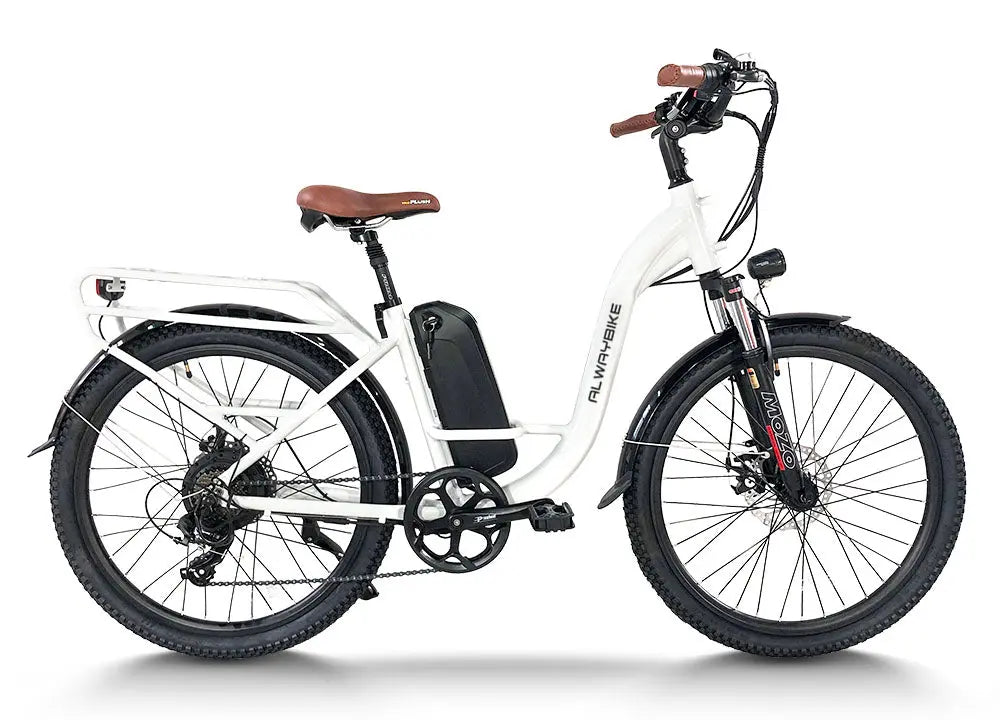
If easy mounting, frequent stops, or limited flexibility are your top concerns, start by comparing step-through electric bikes. Their open frame is designed to make mounting and dismounting easier, while a step-over can be the better fit for a rider who comfortably clears the top tube and prefers its familiar riding position. Neither frame is automatically more stable, sportier, easier to carry, or better for cargo; the complete bike and your routine decide that.

Choose Step-Through Electric Bikes for Easier Access
A step-through is the strongest starting point when you want low-effort mounting, repeated stops, flexible clothing, or less need to swing a leg over a high top tube. A step-over remains a valid choice if you can clear the frame comfortably and its geometry gives you the position you prefer. The Auburn University design rationale for step-through frames supports easier mounting and dismounting, but the opening alone does not determine fit.
| Consideration | Step-through tendency | Step-over tendency |
|---|---|---|
| Mounting | Step in through the frame opening; often the better starting point for frequent stops or reduced flexibility. | Swing a leg over the top tube; works well when clearance is comfortable every time. |
| Dismounting | Lets you step down without lifting a leg over the top tube. | Requires more clearance and a more deliberate leg swing. |
| Clothing or flexibility | Can be practical with work clothes, longer layers, or limited hip and leg flexibility. | May suit riders who have no issue clearing the top tube in their usual clothing. |
| Actual fit | Still requires checking step height, saddle range, reach, handlebar position, and pedal position. | Requires checking top-tube clearance along with the same contact points and riding position. |
For adults searching for the best e-bike frame for easy mounting, compare the actual access points rather than relying on the category name. Check whether your foot can reach the ground as you stop, whether the saddle can be set at a useful height, and whether the handlebar leaves you stretching or crowding the cockpit. Pedal position matters too: a bike that is easy to enter can still feel awkward if the starting pedal position does not suit your balance and routine.

If access is non-negotiable, you can browse step-through commuter e-bikes as a starting category, then verify the exact bike's measurements and setup before buying.
Compare Ride Feel Before Choosing a Frame
Neither frame style is automatically more stable or less sporty. Handling comes from the complete bicycle and riding conditions, including fit, geometry, wheelbase, tires, braking, speed, rider skill, and load, so a test ride or careful model-specific comparison matters more than the frame opening. Research on bicycle balance likewise examines the interaction between the rider and the bicycle, rather than treating one frame opening as a universal stability measure (bicycle-balance research).
Upright Posture and Everyday Handling
An upright position may suit stop-and-go commuting, but the frame label does not guarantee that posture. Saddle height, reach, and handlebar position determine where your hands, hips, and eyes sit on the actual bike.
At a comfortable speed, compare how naturally you can reach the brake levers, keep both hands relaxed, place your feet when stopping, and look ahead. Notice the steering response when you make a slow turn and whether the handlebar feels too close or too far away. A step-through electric bike may feel confidence-building during repeated stops because access is simple, while another model with the same frame category may not fit your reach or saddle position well.
Frame Feel Under Speed and Load
Some riders prefer the familiar or sportier feel of a step-over, but the supplied evidence does not establish that step-through frames are categorically less rigid or less stable. Test the intended bike with the saddle at your normal height and, where practical, with the accessories or load you expect to use.
Pay attention to steering effort, braking behavior, any unwanted wobble, and how the bike responds when you shift your weight. Tires, wheelbase, rider position, cargo placement, and braking setup can all change the experience. The useful question is not simply "Are step-through e-bikes less stable?" It is "Does this complete bike feel controlled for my speed, route, and intended load?"
Match Cargo and Transport Demands to the Frame
Either frame may work for cargo, stairs, or vehicle transport, but those decisions require separate checks. Mounting access does not prove that a bike is light enough to lift, compatible with a hitch rack, or approved for a particular accessory; verify the exact bike, accessory, rack, and instructions.
Cargo Access and Load Placement
A step-through may make it easier to mount and dismount while carrying a bag or managing an errand stop, but approved capacity and load placement determine whether the setup is suitable. The Bay Area Air Quality Management District's guide to battery location and frame space can inform rack and accessory planning; it does not establish a universal cargo advantage or current capacity number.
| Use case | What to verify | Why it matters |
|---|---|---|
| Groceries and errands | Approved combined rider-and-load limit, rack or basket mounts, and clearance. | A convenient frame is not enough if the intended load exceeds the bike's limits. |
| Rear rack or panniers | Mounting points, heel and tire clearance, rack rating, and battery location. | Frame space and battery placement can affect where accessories fit. |
| Front cargo | Approved front mounting points, steering clearance, and accessory instructions. | Front load placement can change steering and must match the bike's design. |
| Child seat or family gear | Specific compatible mounting system, clearance, capacity, and manufacturer instructions. | Accessory compatibility is model-specific rather than guaranteed by frame style. |
Separate the comfort of getting on and off from the work of carrying the bike. A step-through can solve the first problem while the complete bike, battery, accessories, or stairs still create a lifting challenge.
Rack Loading and Vehicle Transport
Frame shape alone does not determine hitch-rack or vehicle-loading ease. Before transport, compare the bike's actual weight with the rack's per-bike limit, check tire width or the approved contact method, confirm that the rack will not press on unsuitable frame parts, and follow any battery or accessory-removal instructions.
The exact bike manual and exact rack manual should be read together before loading. Folded dimensions, when a bike is designed to fold, also need verification; folding does not automatically mean easy lifting or rack compatibility. If a rack requires a frame-contact adapter, confirm that the contact points and frame finish are suitable instead of assuming a low or open frame will work.
Pick the Frame That Fits Your Daily Routine
Choose the frame that addresses your strongest daily constraint: step-through for access-first routines, step-over for a comfortably tested traditional feel, and either style only after cargo, storage, and transport checks. When several needs compete, rank them separately instead of choosing from appearance alone.
| Rider need or routine | Likely starting preference | Checks that could change the decision |
|---|---|---|
| Frequent city stops and repeated mounting | Step-through | Confirm saddle range, step height, reach, and controlled handling at low speed. |
| Limited flexibility or formal work clothing | Step-through | Check that the complete bike still provides a natural reach and comfortable seated position. |
| Familiar or sportier riding position | Step-over | Make sure top-tube clearance is comfortable in your normal clothing and stopping routine. |
| Regular grocery or cargo errands | Either frame | Verify mounting points, clearance, approved capacity, and load placement on the exact bike. |
| Hitch-rack or vehicle transport | Neither frame automatically wins | Compare actual bike weight, tire width, contact method, rack capacity, and removal instructions. |
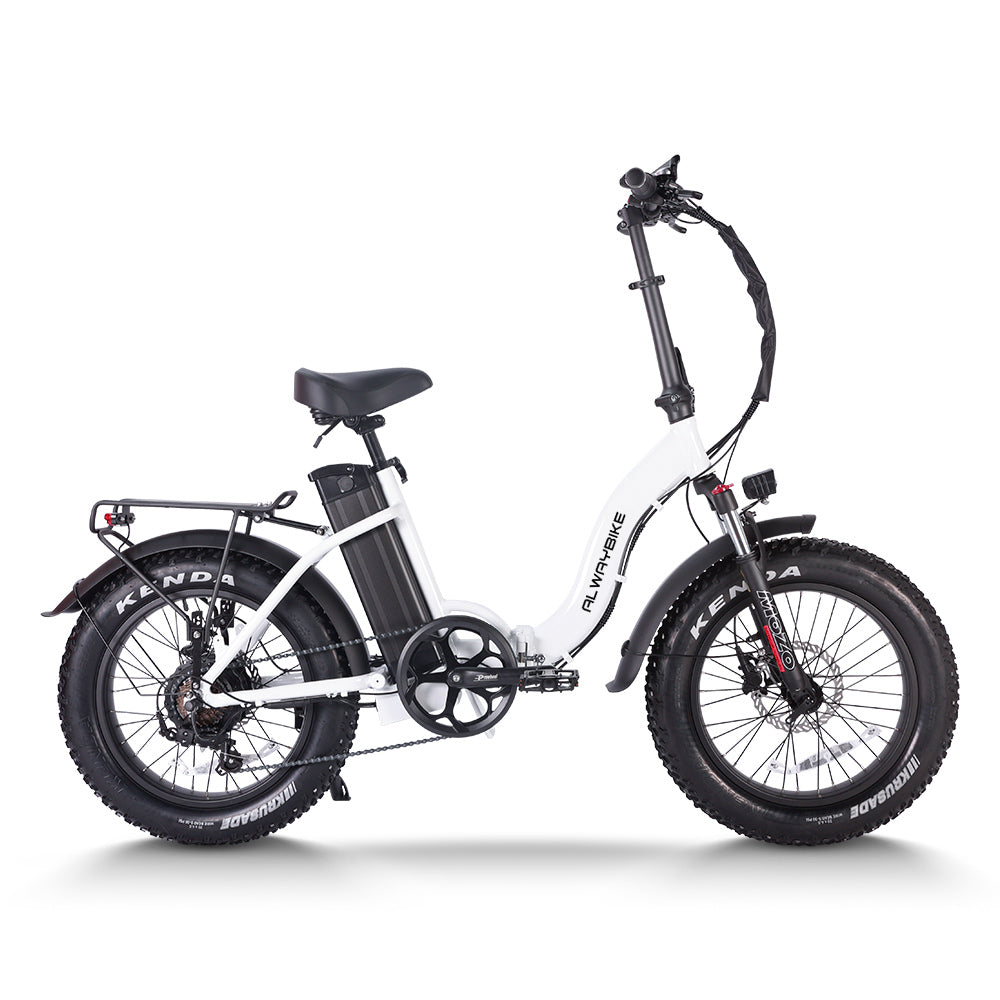
| Apartment, RV, or small-space storage | A foldable option may be worth comparing | Verify folded dimensions and total lifting weight; do not assume folding makes transport easy. |
For mixed needs, write down your first non-negotiable. If it is getting on and off quickly at every stop, begin with step-through electric bikes. If you can clear the top tube easily and strongly prefer a tested step-over position, begin there. Then check the practical constraints that could overturn the first preference: accessory fit, load limits, storage space, and vehicle transport.
We offer foldable e-bike options and commuter categories as browsing paths, but the right choice still depends on the specifications and setup of the exact bike. Use the frame checklist before adding a model to your cart.
FAQs
A step-through usually makes access the starting point, while a step-over may suit riders who prefer its familiar position. Fit, load, and transport checks still decide the exact bike.
Are Step-Through E-Bikes Less Stable Than Step-Over Bikes?
Not automatically. Compare the complete bike's fit, geometry, tires, braking, and behavior with your intended load. If possible, evaluate those factors on the route and at the speed where you plan to ride.
Can I Use a Child Seat or Rear Rack With Either Frame Style?
Possibly, but verify compatible mounting points, capacity, clearance, and the accessory instructions for the exact bike. The frame style by itself does not confirm compatibility.
Are Step-Through E-Bikes Easier to Transport on a Hitch Rack?
Not by frame style alone. Check bike weight, rack limits, tire width, contact points, and battery or accessory-removal instructions before loading.
What Frame Size Should I Get for a Step-Through E-Bike?
Compare the model's recommended height range, saddle range, step height, reach, handlebar position, and pedal placement. A test fit is best when available, especially if you are between sizes or need a specific riding position.
