

What Does E-Bike Range Really Depend On? A Practical Trip-Planning Method


Real-world e-bike range depends on battery energy and the conditions of the entire ride. This practical worksheet shows how to calculate a conservative estimate, check commute fit, compare bikes fairly, and plan for uncertainty.
An e-bike's real-world range depends on battery energy and the full riding situation: bike, rider, and cargo weight; hills; speed; wind; temperature; tire condition; stops; and assist level. The most useful e-bike range calculator is a route-planning worksheet, not a promise of universal mileage. Start with the battery's watt-hour rating, use an energy-use assumption that matches your ride, and compare the result with the complete outing—including the return leg and likely detours.

Real-World Range Is a Combined Battery-and-Route Result
Battery capacity tells you how much energy is available, but it does not determine how many miles every rider will get. To estimate range responsibly, gather the battery, load, route, weather, bike-condition, and riding-setting details that will shape the trip.
Battery Energy and Total Riding Load
Battery capacity is commonly expressed in watt-hours (Wh), calculated from voltage and amp-hours when both specifications are available. Use the manufacturer's watt-hour specification as the starting input for an e-bike range calculator, but do not convert it directly into guaranteed miles. A public-agency E-Bike Guide provides background on battery energy as one part of a real-world range estimate rather than a promise of distance.
Count the complete riding load: the e-bike, rider, bags, child seat or other cargo, and anything else added for the trip. A heavier total load generally requires more energy, especially on climbs or when accelerating often. That does not create a universal penalty you can subtract from every model; it means the load in your estimate should resemble what you will actually carry.
A seller's range figure is useful only when its assumptions resemble your ride. Before using it for comparison, check the battery size, test conditions, assist setting, rider load, terrain, and expected speed. A larger battery can provide more energy, but it still does not guarantee a particular distance on your route. The E-Bike Buyers and Owners Guide is a useful neutral reference for putting battery ratings and range claims in context.
Route, Speed, Weather, and Bike Condition
These real-world e-bike range factors affect how quickly the battery's energy is used:
- Hills and rough surfaces: Climbs and soft, loose, or rough terrain can require more energy than a flat, firm route.
- Speed and acceleration: Higher speeds and frequent hard acceleration can increase energy use compared with a steady, moderate pace.
- Wind: A headwind can make the same route more demanding; a tailwind may affect the outbound and return legs differently.
- Stops: Repeated starts at intersections, errands, and traffic signals can make a route different from a continuous ride.
- Temperature: Cold or changing weather adds uncertainty. Use a more conservative assumption rather than applying a fixed temperature penalty.
- Tire condition and pressure: Low pressure or tires poorly suited to the surface may make the ride less efficient. Check the manufacturer's recommended pressure and the route surface.
- Assist level: Higher assist may reduce rider effort but can use battery energy faster. Classify the setting you expect to use instead of assuming one mode represents every ride.
Moderate speed, firm pavement, correct tire pressure, lighter loading, fewer stops, and lower assist may create more favorable conditions. The key point is directional: each change can move practical range up or down, so the estimate should reflect the actual trip rather than a generic number.
Use an E-Bike Range Calculator for a Conservative Estimate
To calculate e-bike range for a planned route, divide usable battery energy by estimated energy use per mile, then reduce the result by a reserve or margin you choose for uncertainty. This formula is a planning framework—not a standardized performance result—and the energy-use input should come from a comparable ride when possible.
- Define the complete distance. Map the route, including the return leg, likely detours, errands, and any sections where you may need an alternate route. Record the expected distance in miles.
- Record battery energy and total load. Write down the battery's watt-hour specification and the expected bike, rider, and cargo load. If "usable" battery energy is not stated, label that input as an estimate rather than silently treating the full rating as available for travel.
- Classify the riding conditions. Note hills, surface, expected speed, wind exposure, temperature, stops, tire pressure, and assist level. These details determine whether a past ride is genuinely comparable.
- Choose the energy-use input. Use results from a measured ride with similar load, terrain, speed, assist, and weather when available. If you do not have them, label the watt-hours-per-mile assumption as provisional. Online calculators and community formulas can illustrate the structure, but they do not establish one value for every e-bike; one calculator framework is background context, not a standard.
- Calculate the unreserved estimate. Apply: usable battery watt-hours ÷ estimated watt-hours used per mile = estimated distance before reserve. Keep the units visible so you can spot a mistaken input. The result describes the assumptions you entered, not a guaranteed range.
- Apply a conservative margin. Decide how much uncertainty the trip can tolerate based on weather, route difficulty, battery history, charging access, and the consequences of stopping short. Do not copy a universal reserve percentage; state the margin in your worksheet and explain why it is appropriate for this outing.
- Compare the result with the route plan. If the conservative estimate does not comfortably cover the complete outing, change the plan before departure: add a charging stop, shorten the route, reduce optional cargo, choose a less demanding route, or arrange alternate transportation. When no comparable ride supports the energy-use input, treat the result as provisional and plan more cautiously.
This approach helps you calculate e-bike range without turning a calculator into a false-precision tool. After each similar ride, record the route, load, assist, weather, starting battery information, and ending battery information consistently. Over time, that record can replace a generic assumption with evidence from your own use.
 ## Apply the Estimate to a Commute or Daily Trip
For e-bike range on a daily commute, compare the conservative estimate with the entire outing—not just the morning leg. Include the return trip, likely errands, detours, cargo, steep sections, and weather that may differ later in the day. If the margin is small, charging access or fallback transportation is part of the trip decision.
## Apply the Estimate to a Commute or Daily Trip
For e-bike range on a daily commute, compare the conservative estimate with the entire outing—not just the morning leg. Include the return trip, likely errands, detours, cargo, steep sections, and weather that may differ later in the day. If the margin is small, charging access or fallback transportation is part of the trip decision.
| Trip Scenario | What to Include | Planning Action |
|---|---|---|
| One-way ride | Actual route distance, hills, speed, stops, load, and expected assist | Check the ride independently, but do not assume the return leg will have identical conditions. |
| Round-trip commute | Outbound and return distance, different wind or traffic, workday cargo, and charging access | Compare the complete outing with the conservative estimate before leaving. |
| Commute with errands or detours | Added miles, extra stops, shopping weight, and route changes | Add likely changes to the worksheet instead of treating them as negligible. |
| Uncertain weather or steep sections | Forecast uncertainty, exposed hills, surface changes, and alternate routes | Use a more conservative assumption and identify charging or alternate transportation in advance. |
A one-way result can look adequate while the full day is not. For example, a route may be easy in the morning but more demanding on the return because of wind, added cargo, a different assist setting, or an unplanned detour. The trip fits only when the complete plan and its likely variations fit.
If charging is available at work, a store, or another permitted stop, include that location and the time available rather than assuming it will solve every problem. If charging is not dependable, identify a shorter alternate route, a pickup option, public transportation, or another practical fallback. Once the worksheet matches your storage and charging needs, you can browse commuter e-bikes as a category—not as proof that any particular model will cover the route.
Reduce Range Uncertainty Before Relying on the Return Trip
A low-margin trip deserves validation before it becomes part of a routine. Replace generic assumptions with a comparable ride where possible, keep consistent records, and maintain a fallback plan for conditions that can change during the day.
Validate the Estimate With a Comparable Ride
Use this three-part check before relying on the estimate:
- Match the conditions. Choose a test route with similar hills, surface, load, speed, stops, temperature, and assist level. A short flat ride is not strong evidence for a hilly, fully loaded commute.
- Record the ride consistently. Note the route, distance, riding settings, weather, tire condition, starting battery information, and ending battery information. Use the same approach on later rides so comparisons are meaningful.
- Update the worksheet conservatively. Replace the provisional energy-use input only when the ride is genuinely comparable. Treat one display reading or one unusual trip as a data point, not a guarantee or a diagnosis of battery condition.
The goal is not to promise a precise result. It is to make the estimate more representative of the route you actually ride.
Build a Backup Into the Route Plan
- Identify charging or alternate transportation when the return leg has little margin or the weather may change.
- Remove unnecessary cargo and check tire pressure before a trip where every assumption matters; follow the tire maker's recommended pressure rather than using a universal setting.
- Choose assist for the terrain instead of assuming the highest setting will fit the same battery plan; note any setting change that could affect the return leg.
These are uncertainty controls, not guarantees. A fallback protects the trip if the route, weather, battery indication, or riding pattern differs from the worksheet.
Choose by Usable Trip Fit, Not the Headline Range
When two e-bikes appear suitable, compare them under the same route, load, speed, weather, assist, battery-energy, charging, and reserve assumptions. The better choice is the one whose verified specifications and physical setup fit the complete trip—not necessarily the one with the largest advertised number.
Normalize the comparison before looking at the headline range. Use the same start and end points, include the same detours and cargo, and describe the same expected riding conditions. Then check whether each bike's battery specification, charging arrangement, storage space, carrying needs, and available fallback options support the plan. A range figure based on different test assumptions is not an apples-to-apples result.
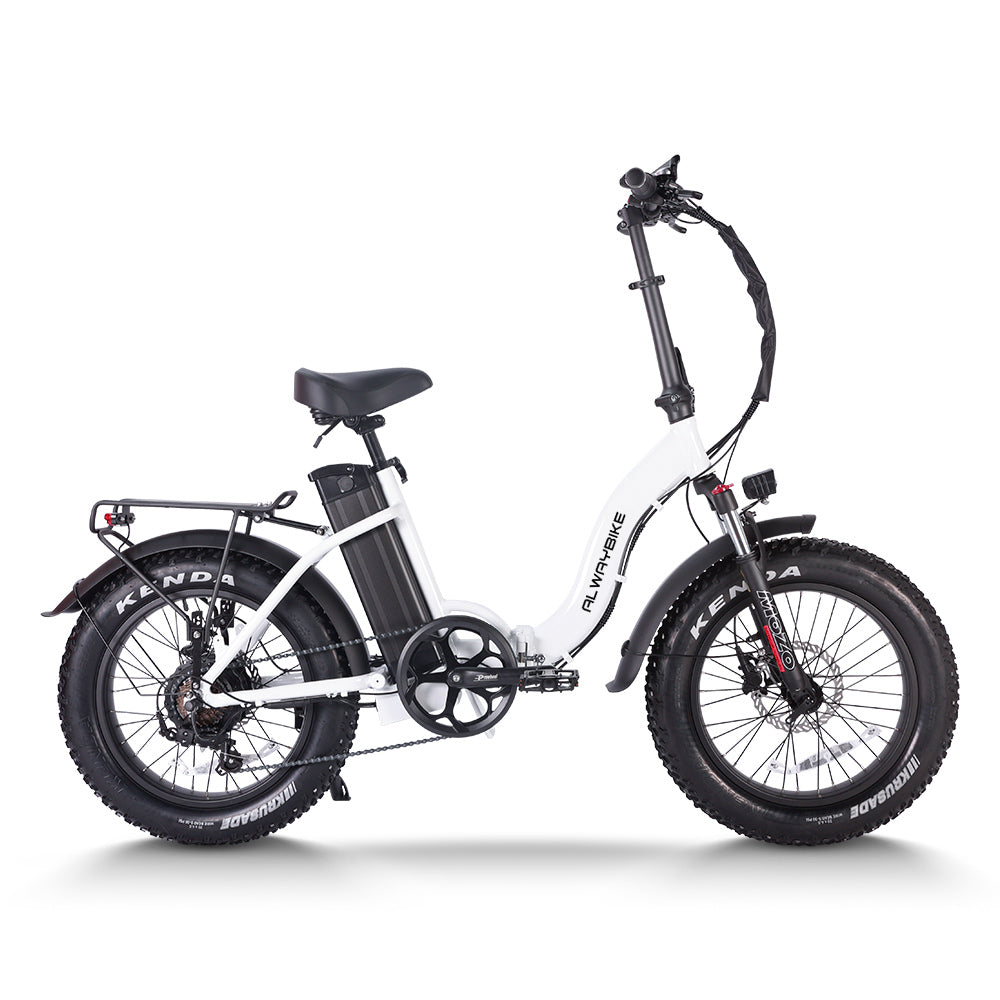
For a storage-sensitive shopper, folding size and carrying practicality can change the decision even when two range estimates look similar. If the worksheet confirms the route fit, browse foldable e-bikes as a next category to evaluate. Verify current specifications, charging requirements, and physical fit before relying on any product-page range claim.
Complete the worksheet for your actual route, including the return leg, load, conditions, charging options, and fallback. Then compare e-bikes only when their verified specifications, storage needs, and charging setup match that plan.
FAQs
Range questions are easiest to answer with the same route-specific inputs used in the worksheet. Treat battery displays and generic range claims as estimates, especially when the trip has little margin.
How Do I Account for Battery Age in an E-Bike Range Estimate?
Do not apply an invented age-based penalty. Compare a familiar route under similar conditions and update the worksheet conservatively if the measured result changes materially.
Should I Calculate E-Bike Range for the Round Trip or Each Leg?
Calculate the complete outing first, then inspect each leg separately. Mark charging or alternate transportation before deciding that one charge covers the plan.
Can an E-Bike Display Predict Whether I Will Finish a Trip?
No display estimate is a guarantee. Compare it with your route worksheet, and use the planned fallback when the remaining margin is small.
How Should I Plan Range for a Cold-Weather Commute?
Use a more conservative assumption rather than a fixed percentage. Check applicable battery-care instructions and identify charging or alternate transportation before departure.
