

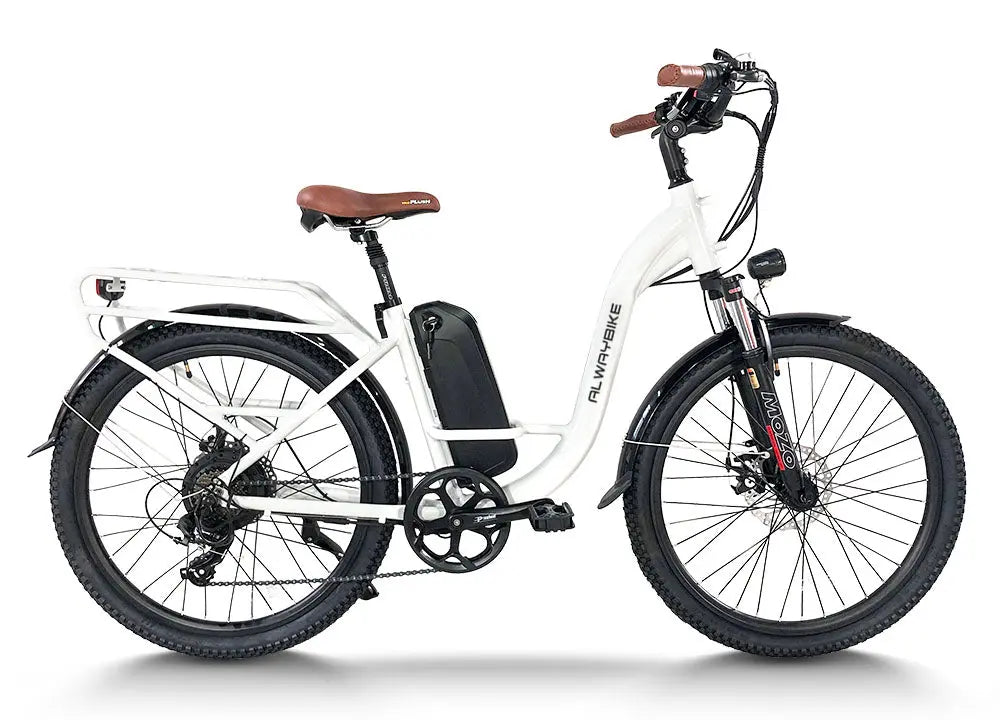
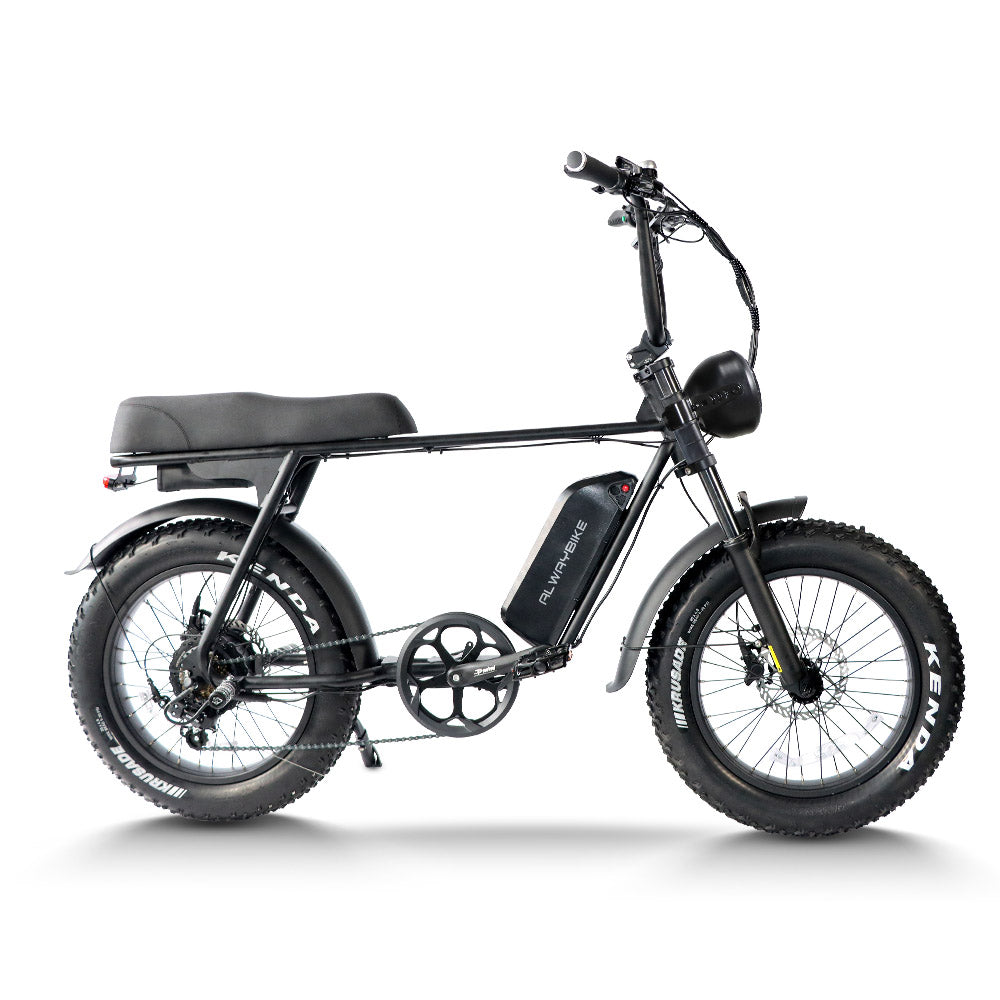
Moped E-Bike or Electric Motorcycle? A Classification Check Before You Buy


Before buying, compare a moped e-bike and electric motorcycle by documented features, then match the vehicle to local route and insurance rules.
A moped e-bike is not automatically an electric motorcycle, and neither label determines the legal category nationwide. Before you buy, record the vehicle’s usable pedals, propulsion method, motor and speed information, equipment, and stated riding environment. Then ask the applicable state or local authority how that exact configuration may be used on each planned route. A product listing is a starting point, not a legal conclusion.

Moped E-Bike or Electric Motorcycle? Compare the Documented Vehicle Signals
Start with the vehicle’s documented features, not the name used in the listing. These features may place it in a provisional pedal-oriented e-bike, moped-style, or motorcycle-like category, but no single feature establishes a nationwide legal classification.
For federal product-safety purposes, the federal low-speed electric-bicycle definition describes a two- or three-wheeled vehicle with fully operable pedals, a motor under 750 watts, and a motor-only speed under 20 mph under specified test conditions. That is a product-safety baseline—not a nationwide answer about licenses, registration, insurance, or road access.
| Documented signal | Pedal-oriented e-bike comparison | Moped-style or motorcycle-like comparison | Question to verify |
|---|---|---|---|
| Usable pedals and propulsion | Fully operable pedals and pedal assistance may support an e-bike comparison. | Limited pedal function, no pedals, or propulsion that does most of the work raises a different category question. | Do the pedals provide usable human propulsion, and when does the motor operate? |
| Motor or power information | A specification near a state or federal e-bike framework may support a provisional e-bike comparison. | Higher or unclear power may suggest a moped or motorcycle-like review, but wattage alone is not decisive. | What exact motor rating appears on the current specification sheet? |
| Speed capability | A common three-class framework uses pedal assist to 20 mph for Class 1, motor propulsion to 20 mph for Class 2, and pedal assist to 28 mph for Class 3 with a speedometer. | Speed outside the applicable framework may raise a motor-vehicle classification question. | What is the documented top-speed capability, and under which operating mode and test conditions? |
| Throttle or assistance behavior | Pedal assist or limited motor propulsion may fit a state e-bike framework. | Throttle-heavy operation or motor propulsion without pedaling may require a separate local analysis. | Does the motor run without pedaling, and when does assistance stop? |
| Motorcycle-style equipment | Bicycle-oriented equipment may support a comparison with an e-bike, subject to local rules. | Mirrors, a motorcycle-style frame, lighting, a horn, or other equipment can signal a need for closer review, but do not prove a motorcycle category. | Which equipment is installed, and which items does the authority require for this category? |
| Stated street use versus private land or track use | A stated commuter or city-use description may support a route-planning inquiry. | An “off-road only,” private-land, or track instruction limits the documented use case; it does not establish public-road eligibility. | Does the manufacturer restrict this exact model or configuration to private land or tracks? |
| Intended riding environment | A planned commute or neighborhood trip points toward public-route and bikeway questions. | Motorcycle-like riding, trails, tracks, or high-power off-road use points toward different authorities and access rules. | Who controls each road, lane, path, trail, or private property where you intend to ride? |
The common three-class framework is useful for recording pedal and throttle behavior, but it is not a universal U.S. moped or motorcycle rule. State traffic laws and vehicle codes can define e-bikes, mopeds, and other motorized vehicles differently and can impose different paperwork or access requirements.
California shows why the label is insufficient. Its DMV handbook describes motorized bicycles or mopeds and electric bicycles using different technical criteria, including differences in pedals, propulsion, speed, motor, and transmission. The California definitions example is California-specific and should not be used as a nationwide threshold.
If the specification sheet is incomplete or contains conflicting figures, stop at a provisional comparison. Get the current model-specific documentation before asking an authority or insurer about the vehicle.
Turn the Product Comparison Into a Local Classification Check
Start by saving the exact model and configuration, then gather the documents that describe that vehicle. State traffic laws govern operation, and the NCSL state-law overview illustrates why the answer can vary by jurisdiction.
Collect the current specification sheet, owner documentation, product labels, motor and speed information, pedal and throttle description, equipment list, identification details, and any street-use or off-road restriction. If a listing contains conflicting specifications, preserve the discrepancy and request clarification instead of choosing the more favorable number.
Next, write down every intended setting: public roads, bike lanes, multi-use paths, trails, private land, or a track. Use the relevant state license guidance only as background, not as a substitute for the agency or land manager that controls your route.

Use this purchase-stage sequence:
- Name the exact model, configuration, and identifying information.
- Give the authority the specification and use documents, not just the seller’s label.
- List each planned route type and land type separately.
- Ask the state motor-vehicle agency, municipality, road authority, park, trail system, or land manager how that vehicle is treated in each setting.
- Save the response with your purchase records and use it when discussing coverage with an insurer.
When no single authority clearly controls the answer, pause the order and contact the state vehicle agency plus the route or land manager. Do not infer the legal result from the words “moped e-bike” or “electric motorcycle.”
Check Licensing, Registration, and Insurance Before Ordering
Treat credentials, vehicle paperwork, and insurance as three separate decisions. A favorable answer to one does not answer the other two. California’s handbook illustrates that highway operation can involve equipment, registration, financial-responsibility, licensing, and operational requirements, but its rules are not a national standard.
Confirm Whether a Driver or Motorcycle License May Apply
Ask the applicable state motor-vehicle authority whether the documented vehicle and intended operating location require a driver’s license, motorcycle license, moped credential, or another form of authorization. Include the model configuration, motor and speed documentation, pedals, and planned route in the question.
Usable pedals or an e-bike-style label do not automatically eliminate a licensing question. If the authority treats the vehicle differently on a public road, bike lane, trail, or private property, record the answer for each setting rather than relying on one general response.
Confirm Registration, Title, Plate, or Vehicle Identification Requirements
Ask whether the vehicle must be titled, registered, plated, or assigned identifying documentation for the roads, trails, or private land where it will be used. Have the model specifications and manufacturer documentation available; a catalog label is not enough.
This check is especially important when the product page uses inconsistent specifications or when a vehicle is marketed with e-bike, moped, and motorcycle terminology. Registration status is a jurisdictional question tied to the configuration and intended location.
Ask an Insurer About Coverage Separately
Ask an insurer whether it covers the vehicle and intended use, including liability, motorcycle, moped, off-highway, or excluded-use provisions. Ask before ordering if coverage affects your purchase decision.
Do not treat the absence of a plate or license requirement as an answer about insurance. An insurer may use its own underwriting description, so provide the same specifications, identification details, routes, and private-land or public-road plans that you gave the government authority.
Verify Equipment and Access for Every Planned Route
Equipment compliance and route permission are separate checks. Confirm both for each planned road, bike lane, path, trail, or private-land setting; permission in one place does not establish access somewhere else.
Match the Vehicle’s Equipment to the Applicable Requirement
Ask the controlling authority which requirements apply to lights, reflectors, brakes, mirrors, a horn, helmet use, age limits, and other equipment for the local category and riding location. This is a set of prompts for confirmation, not a complete or universal U.S. checklist.
Compare the required equipment with the configuration you would receive. A manufacturer-installed street kit may help identify what is included, but it does not by itself prove public-road or bike-path eligibility. Missing or undocumented equipment can also change the answer when other features appear to fit an e-bike framework.
Confirm Access for Roads, Bike Lanes, Paths, Trails, and Private Land
Ask the state, city, park, trail system, or land manager about each route type separately. California, for example, uses class and local-authorization rules to distinguish some bike-lane and path or trail access questions, as shown by its route-access example. That example demonstrates variation; it does not decide access in another state.
Treat private-land or track instructions as a use limitation, not evidence of street access. A high-power vehicle, motorcycle-like configuration, or off-road label deserves extra scrutiny before you plan a commute. Confirm any helmet, age, lane, path, trail, land, or equipment restriction in the controlling authority’s current rule.
Match the Verified Category to Your Intended Ride Before You Buy
Choose the purchase direction after documenting the model, configuration, routes, and obligations. The vehicle should fit the intended environment first; the authority and insurer answers determine whether the planned use can proceed.
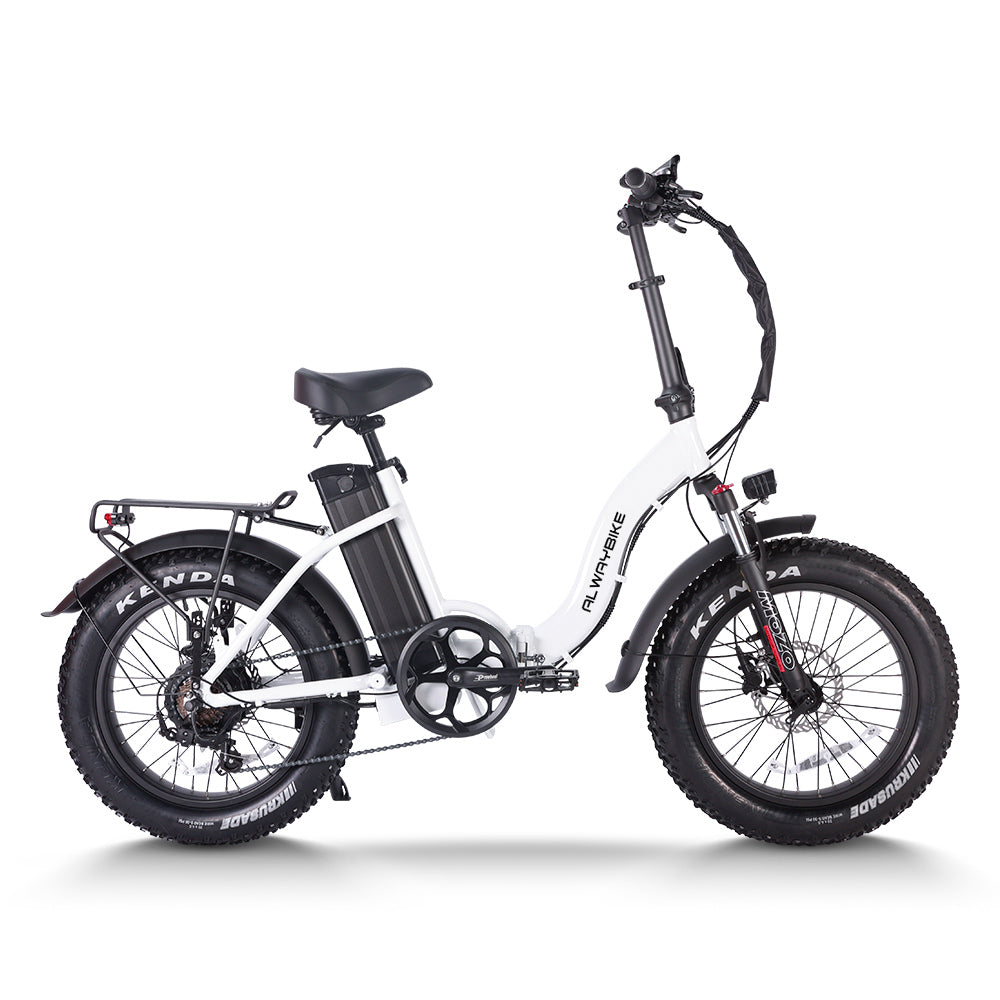
- City commute: Start with a documented, pedal-oriented configuration, then confirm every road or bikeway, equipment requirement, credential, paperwork obligation, and insurance question. The manufacturer describes the CEMOTO EB40 specs as a 20 mph, Class 2 commuter model, but the supplied page contains conflicting motor, battery, and brake specifications. Confirm the current specification before relying on it for an authority or insurance inquiry.
- Neighborhood trips: Compare usable pedals, throttle or assistance behavior, speed capability, equipment, and route access with the local definition. Do not choose based on the word “moped” alone, especially if your trip crosses city or county boundaries.
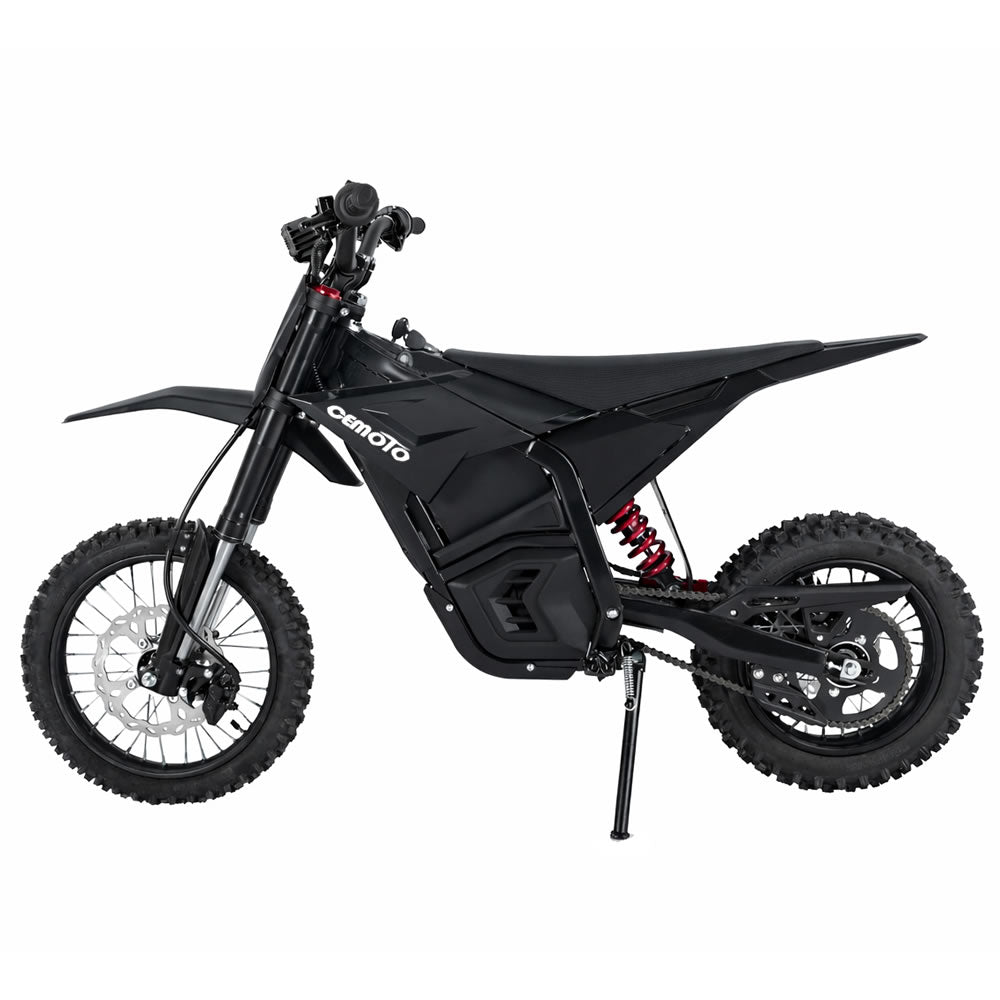
- Motorcycle-like or off-road riding: Prioritize the documented riding environment and the land manager’s rules. The manufacturer describes the CEMOTO D-Series specs as 3,000W–6,000W variants for off-road use on private land and tracks. That limitation does not establish public-road, bike-lane, trail, or registration eligibility.
- Mixed road and off-road use: Pause before ordering or arranging shipping. Save the specifications, then obtain authority answers for each route, equipment confirmation, licensing and registration answers, and insurer confirmation for the complete plan.
The practical selection record is documentary: the exact model and configuration, the applicable authority’s response for every planned route, and insurer confirmation for the intended use. If any of those remains unresolved, do not treat the vehicle as a verified commuter or street-use option.
Frequently Asked Questions
These purchase-stage questions address the points that most often change the choice between a pedal-oriented vehicle and a motorcycle-like one.
Is a Moped E-Bike the Same as an Electric Motorcycle?
No. The labels can describe different practical vehicle profiles, and the legal category depends on the documented vehicle plus the applicable state or local definition. Compare the specifications before relying on either term.
Does a Moped E-Bike Need a License?
It may. The answer can depend on the vehicle’s configuration, route, and jurisdiction. Ask the applicable state motor-vehicle authority about the model before buying or riding.
Do Moped E-Bikes Need Registration or Insurance?
They may, depending on the jurisdiction, vehicle category, and intended use. Ask the relevant authority about title, registration, plates, or identification, then ask an insurer whether coverage applies to the model and use.
Can a Moped E-Bike Use Bike Lanes?
Not necessarily. Bike-lane and path access can depend on local definitions, route rules, vehicle features, and land-manager restrictions. Verify each planned route separately before treating it as part of a commute.
