

Folding Electric Trike or Standard E-Bike: Which Storage Problem Are You Solving?


Compare a folding electric trike with a standard e-bike by measuring doorways, turns, storage, lifting, vehicle loading, security, and riding confidence.
A folding electric trike is the better starting point when riding confidence or a specific use case is essential—and the exact model clears your toughest doorway, turn, storage, lifting, transport, and security constraints. A standard two-wheel e-bike is the better starting point when narrow clearance, a simpler loading routine, or easier locking is the constraint most likely to make the purchase impractical. Folding can change access or footprint, but it does not prove fit.

Choose Between a Folding Electric Trike and a Standard E-Bike
Start with the constraint that could make the vehicle an immediate no-fit, such as the narrowest opening, tightest turn, storage envelope, vehicle-loading requirement, or locking point. Then use riding confidence to choose between the formats that meet those physical requirements.
| Limiting constraint | A folding electric trike may fit when | A standard two-wheel e-bike may fit when |
|---|---|---|
| Narrowest doorway or hallway | Its exact folded width, height, wheel position, and required approach clear every opening and turn. | Its verified dimensions and orientation create a more workable route within the available clearance. |
| Folded or parked footprint | The folded envelope fits without blocking an exit, shared path, or storage access. | Its parked position fits the space, including a vertical or perpendicular-to-wall arrangement when the wall, mounting method, and access path allow it. Bike storage guidance describes this as a way to reduce floor use, not as proof that a specific bike will fit. |
| Lifting and vehicle loading | The complete folded setup—including its balance, loading height, carry distance, and cargo-space needs—is manageable according to the product and vehicle instructions. | Its exact loading routine better matches the rider's available rolling, lifting, and securing capacity, even if the parked footprint is longer. |
| Vehicle transport and securing | The vehicle opening, cargo area or carrier, weight rating, compatibility, and securing method all work for the selected model. | The complete setup meets the carrier and vehicle requirements with a routine the rider can use consistently. |
| Indoor or shared-storage security | There is a usable locking point, enough clearance to reach the designated secure points, and a suitable battery or component-storage routine. | Its frame position and storage location make locking and component storage more practical, subject to the exact specifications. |
| Turning space | Its exact width, wheel position, and maneuvering approach clear the tightest turn on the route. | The rider can manage the two-wheel format confidently, and its verified route requires less turning space. |
| Riding confidence | Its three-wheel layout addresses a meaningful balance or low-speed confidence need, and it also clears every physical constraint. | The rider can use a two-wheel format confidently, and its verified storage or transport routine solves the limiting constraint better. |
The table is a decision filter, not a category-wide verdict. A folding electric trike may solve an access or confidence problem while creating another at a turn, loading point, or lock location. A standard e-bike may take up more floor length but work better with an allowed storage orientation or a simpler vehicle routine.
Measure the Entire Route Before Comparing Models
Turn the storage problem into a route sheet before comparing advertised features. Record the actual clearances and handling points, then mark each model requirement pass, fail, or needs confirmation.
Trace the complete path. Start where the vehicle arrives and follow the route to its storage position. Include exterior and interior doors, gates, hallways, elevators, ramps, stairs, elevation changes, shared paths, and any place where an exit must remain clear. The narrowest point may not be the doorway.
Measure clear openings and turns. Record the narrowest clear width and height, plus the space available to approach and rotate at each turn. Note whether the vehicle must be folded, unfolded, tilted, rolled, or carried. Compare the route with the model's folded orientation, width, height, and wheel position—not just with the word “folding.”
Measure the storage position. Record the available length, width, height, floor clearance, and access around the parked or folded vehicle. Include the space needed to lock it, remove or store components according to the applicable instructions, and reach the vehicle without blocking an exit or common area.
Measure the vehicle and loading path. Record the vehicle opening, cargo-area length and width, loading height, wheel-well interference, and the distance over which the vehicle must be rolled, lifted, or carried. If you plan to use a rack, record its stated per-bike capacity, e-bike compatibility, and securing method for the complete setup.
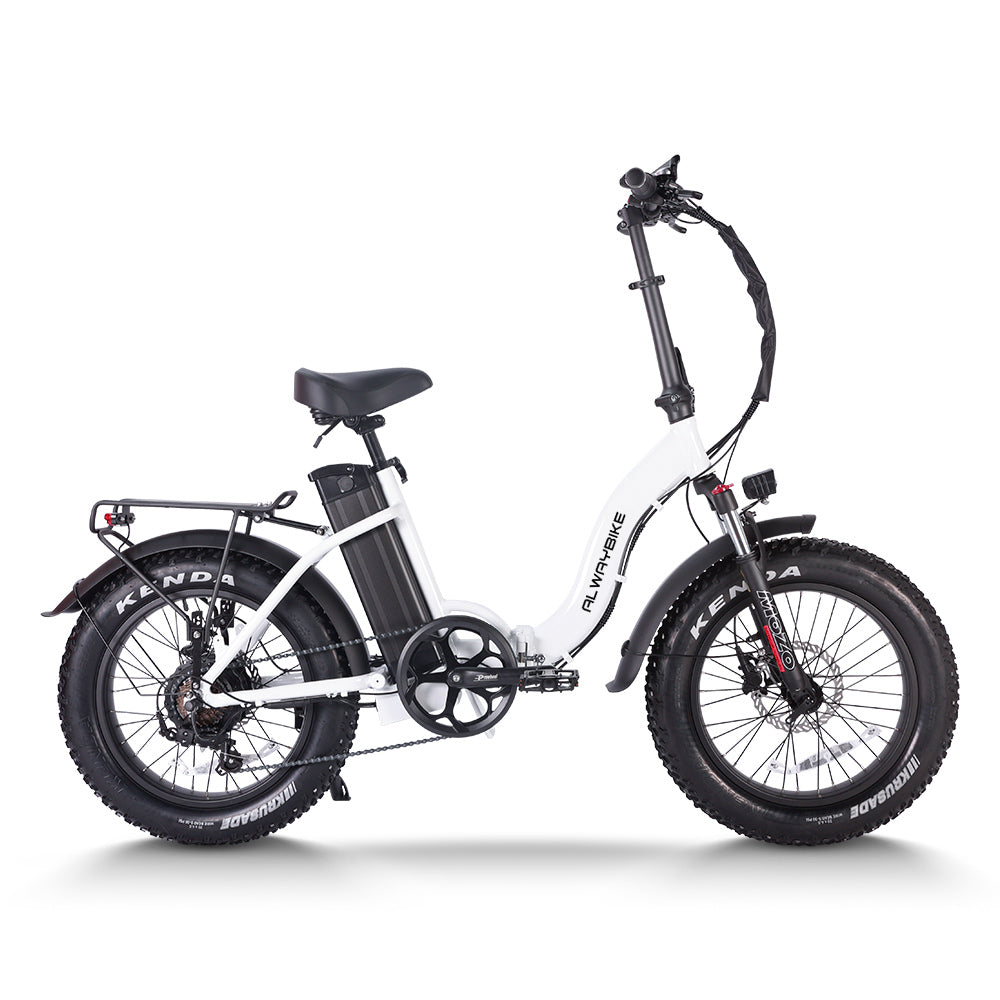
Compare both models line by line. Use the exact product page or manual for folded and unfolded dimensions, total weight, folding method, folding orientation, wheel position, and transport instructions. Mark a missing or differently oriented specification as needs confirmation, not as a pass. After recording your constraints, you can browse foldable e-bike options as a starting point, but the collection cannot confirm fit for your route.
A dimension without a stated orientation cannot produce a pass result. Keep that item open until the product documentation explains how the vehicle is folded or moved.

Account for the Handling and Security Work That Folding Does Not Remove
Folding may change the vehicle's shape or placement, but the complete handling and security routine still determines whether storage is practical. Evaluate the folded setup in the place and orientation where you will actually use it.
Can You Lift and Load the Complete Setup?
A folding label does not establish that a lift is manageable. Compare the exact folded weight, balance, handle position, wheel position, loading height, carry distance, and available cargo or securing space with the routine you can reliably perform. Also distinguish rolling from lifting: a vehicle that rolls to the car may still require lifting over a sill or into a cargo area.
A standard e-bike can be the more practical transport choice when its specific loading routine requires less demanding rolling, lifting, or securing, even if its parked footprint is longer. The reverse can also be true for a particular trike model. Folding shape and rack suitability are separate decisions, so use an e-bike-rated rack when the carrier guidance calls for one. For a carrier, compare its e-bike weight capacity and securing method with the complete selected vehicle and carrier arrangement. Follow the product, rack, and vehicle instructions for loading, securing, and any removable components. Do not assume that removing a battery or accessory automatically makes the remaining setup safe or easy to handle.
Can You Secure the Folded or Parked Vehicle?
Storage fit includes security, not just floor area. Identify a usable locking point and enough clearance to reach the frame or designated secure points without blocking a doorway, common path, or vehicle access. Then compare the model's frame geometry, folded position, removable components, and battery-storage routine with that location.
A smaller folded footprint is not useful if the vehicle cannot be locked conveniently, must remain exposed, or cannot be stored according to the applicable product guidance. Vertical or perpendicular-to-wall storage may reduce floor use when the wall, mounting arrangement, clearance, and access path allow it, but the chosen position still has to support the actual locking and component-storage routine. Without clear storage and security instructions, the arrangement is not ready for a purchase decision.
Validate Turning Space and Riding Confidence at the Hardest Point
The final choice comes down to the hardest physical point, not the product label. Test the exact model at the doorway approach, turn, storage maneuver, or loading moment most likely to stop your routine.
Choose the folding electric trike when its three-wheel layout addresses a meaningful balance or low-speed confidence need and the model passes the measured width, turning, storage, lifting, transport, and security requirements. Confidence can influence the choice, but it cannot make a failed doorway, unmanageable lift, unsuitable carrier, or unusable locking point acceptable.
Choose the standard e-bike when the trike's width or turning demand creates repeated access problems and the rider can use a two-wheel format confidently. Its routine may better match a narrow route, a vehicle-loading limit, or a security setup. Do not assume that result from the category name; compare the two exact models, including the orientation each requires.
If a standard e-bike is the better fit after this comparison, you can compare commuter e-bike options against the same route measurements. Our collection pages are a place to continue shopping, not evidence that a particular model passes your doorway or vehicle test. Take your completed home-to-storage and vehicle-loading measurements, compare them with the exact specifications and instructions for one shortlisted folding e-trike and one standard e-bike, and reject any option that fails or remains unverified at the hardest point.
Frequently Asked Questions
These answers address the conditions that can change a storage decision without replacing the model-level comparison above.
Does Folding Make a Trike Compatible With Any E-Bike Rack?
No. A folding shape does not establish rack suitability. Use the carrier's stated capacity, e-bike compatibility, and securing method for the complete vehicle and carrier arrangement before planning that transport method.
What Should I Do if the Folded Dimensions Do Not Show the Moving Orientation?
Do not treat the dimension as a doorway pass. Keep the item at needs confirmation until the product documentation states the folded orientation, wheel position, and required way to move the vehicle through the route.
When Is Indoor Storage Actually Practical?
It is practical only when the parked or folded position leaves the exit and shared path clear, provides a usable locking point, and supports the applicable component-storage routine. A smaller footprint alone does not settle those conditions.
What Storage Trade-Off Can Folding Leave Behind?
The vehicle may still require substantial handling, loading space, turning room, or awkward access to a lock after it folds. If those demands occur at the hardest point in your routine, compare a standard e-bike that passes the same physical constraints instead.
