

Electric Scooter for a 300-Pound Rider: Check Payload, Brakes, and Real-World Range


A practical buying guide for heavier riders covering payload math, brake and deck checks, tire fit, route-based range, and when to pause before purchase.
If you're shopping for an electric scooter for adults 300 lbs, use this order: calculate the full rider-and-gear load, verify the manufacturer's stated payload limit, then check the brakes and physical fit. Treat the published range as a route-dependent estimate, not a guaranteed distance. If a listing leaves the payload definition, brake operation, dimensions, or range conditions unclear, pause the purchase until you can verify them.

Calculate the Total Payload Your Scooter Must Support
Your scooter's required payload is your body weight plus everything you carry while riding. For a rider near 300 pounds, that may include clothing, a backpack, a lock, groceries, and other gear. Add those weights in pounds before comparing them with a listing.
For example, an illustrative setup might be 300 pounds of rider weight + 8 pounds of clothing and a backpack + 4 pounds for a lock and other gear = 312 pounds of total load. This is only a calculation example, not a typical load or a recommended scooter threshold. Use your own measured weights, then compare the result with the manufacturer's exact stated limit.

The key question is whether the listed limit means total payload or rider-only weight. Check the product specifications and owner manual first. If the wording conflicts or does not say what the limit includes, contact manufacturer support and save the answer with your product-page notes. CPSC micromobility guidance also tells riders to follow manufacturer instructions, identify device weight limits, and inspect parts such as the brakes, tires, controls, cables, and frame.
Accept the capacity only when the exact manufacturer-defined limit clearly covers your full rider-and-gear load. Reject a documented limit below that load. Further verify any rider-only, undefined, or conflicting rating. Before buying or riding, stop if you cannot show that the manufacturer's total-payload comparison works.
Verify Brakes and Rider Fit for Everyday Control
A matching payload number does not show that the scooter's controls and physical layout will work for you. Review the brake system and rider interface as separate product-page checks.
Check Brake Hardware and Controls
Record the brake type, which wheel or wheels it brakes, how the controls work, and any model-specific setup or maintenance instructions. A phrase such as "disc brakes" is not enough to explain the control layout or everyday operation. Motor power is not proof of stopping performance.
Ask focused questions about your route. How do you operate the brakes? What does the owner manual say about adjustment or maintenance? Does the listing explain the controls clearly enough for repeated starts and stops, downhill sections, wet conditions, and the full riding load? These questions show what to verify; they do not support an invented stopping distance or performance guarantee.
If the brake hardware, braked wheel, control operation, or product-specific instructions are missing, treat the brake check as unresolved. CPSC inspection guidance supports checking the brakes and related controls before riding, but it does not set one universal brake standard for every scooter or rider.
Check Frame Access, Deck Space, and Tire Fit
Next, check whether you can stand on and operate the scooter in the position your route requires. Record standing access, handlebar and control reach, usable deck dimensions, deck height, and any fold or latch that could affect your position. An adult-oriented label does not prove that every larger rider will have the same access or deck fit.
Use tire diameter, tire construction, suspension, and ground clearance to judge route fit. A DOT scooter design study examined four models and offered cautious design guidance on usable deck length, deck height, tire diameter, suspension, and ground clearance. Those findings are not universal comfort, stability, or safety thresholds.
For a mostly smooth, flat commute, exact deck and control dimensions may be the main fit questions. For uneven surfaces or routes with changing ground conditions, record the tire and suspension details too. If dimensions, access, or tire construction are missing, ask for the exact specifications or inspect the scooter before purchase. Do not infer comfort or control from the marketing category alone.
Interpret Published Range for Your Load and Route
Published range is useful only when its test conditions resemble your actual trip. Compare the full load and route instead of applying a fixed reduction to the advertised number.
A heavier load can require more power and may reduce range, but the supplied evidence does not support a universal percentage or guaranteed distance. Background buying guidance on scooter load and range supports treating load as a factor in power demand and range, not as a reason to calculate one reduction for every model.
Start with the one-way and round-trip distance. Then compare the listing's assumptions with your full load, hills, surface, riding speed, frequent starts and stops, temperature, wind, tire pressure, battery age, and riding mode when those details are disclosed. A short, mostly flat route with routine stops is a different comparison from a hilly, stop-and-go trip with few chances to recharge.
When a listing gives a range but no usable load, speed, terrain, temperature, or riding-mode assumptions, ask the seller or manufacturer for those conditions. If the conditions do not resemble your route, classify the range as further verify instead of accepting the headline distance. For hills, heavy stop-and-go traffic, cold weather, or limited charging access, require route-relevant evidence before relying on the claim.
Use One Product-Page Decision Path: Accept, Reject, or Further Verify
Use the product page, owner manual, and manufacturer support together. Accept a listing only when the full load is covered and the material brake, fit, tire, and range evidence is clear. Reject a documented mismatch. Further verify any missing, conflicting, or undefined fact that could change the decision.
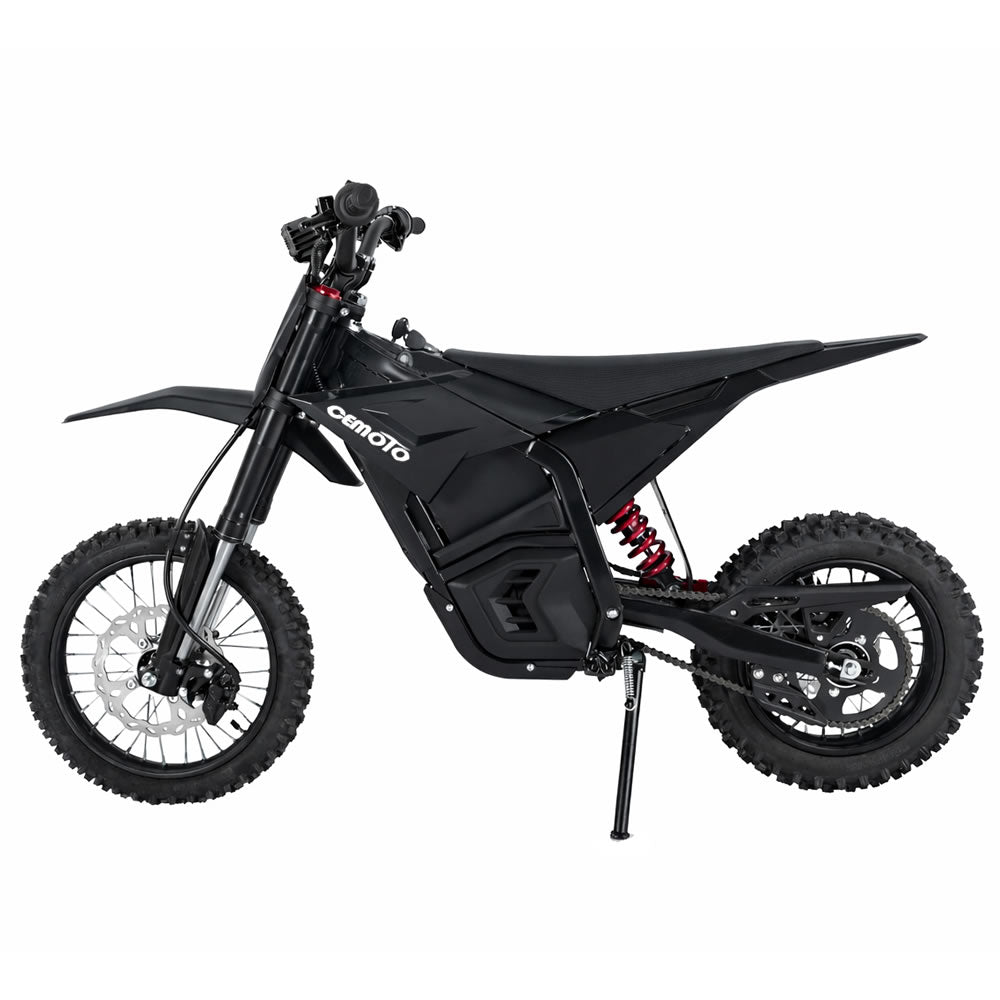
The CEMOTO J01 listing shows the type of fields worth recording: a listed 150 kg maximum load, double-disc brakes, 10-inch off-road inflatable tires, front and rear suspension, and a stated 50–55 km range. Those are listing details, not proof that the scooter is suitable for a 300-pound rider. The supplied product information does not establish whether the 150 kg figure is rider-only or total rider-and-gear payload, or which load, speed, terrain, temperature, and mode produced the stated range.
| Check | Accept When | Reject or Further Verify When |
|---|---|---|
| Total payload | The manufacturer clearly defines the limit and it covers your complete rider-and-gear load. | Reject a documented limit below your load. Further verify rider-only, conflicting, or undefined wording. |
| Brakes and controls | Brake hardware, the braked wheel or wheels, controls, and model-specific instructions are understandable. | Further verify vague brake details. Reject a documented control or route mismatch. |
| Frame access and deck | Standing access, reach, usable deck, deck height, and fold or latch interaction fit your intended use. | Further verify missing dimensions or access details. Reject a clear physical-fit mismatch. |
| Tires | Tire diameter and construction suit the route, with suspension or ground-clearance details recorded when relevant. | Further verify missing tire or route-fit information. Reject a documented mismatch with the intended surface. |
| Range conditions | The stated test conditions are close enough to your load and route to make the comparison useful. | Further verify missing or mismatched load, speed, terrain, temperature, or mode assumptions. |
Product-page screening order for a 300-pound rider
Use this as a screening sequence, not a performance score: accept only when each material field is documented for the intended load and route; reject a documented mismatch; further verify missing or conflicting information.
View chart data
| Category | Decision sequence |
|---|---|
| Payload | 1.0 |
| Brakes and controls | 2.0 |
| Frame and deck fit | 3.0 |
| Tires and route fit | 4.0 |
| Range conditions | 5.0 |
This sequence is a purchase screen, not a safety certification. Do not ride while the complete-load limit or a material question about the brakes, frame, deck, or control suitability remains unresolved. After applying these checks, you can compare electric scooter listings, but move a listing toward the cart only after the material rows are accepted or clarified. No single model should be treated as the universal best choice for every 300-pound rider.
Electric Scooter for Adults 300 lbs: Questions Shoppers Ask
What Should I Look for in an Electric Scooter for a 300-Pound Rider?
Start with a clearly defined total rider-and-gear payload. Then check brake operation, controls, standing access, deck geometry, tires, and range conditions that match your route. If one material field is unclear, ask one focused product-specific question before comparing the listing with others.
How Does Rider Weight Affect Electric Scooter Range?
A heavier full load can increase power demand and may reduce range, but there is no universal reduction to apply. Compare the manufacturer's stated assumptions with your actual load, distance, hills, speed, stops, surface, and weather. If those conditions are missing or differ sharply, treat the range as unverified.
Which Features Matter Most for Heavier Adults?
Prioritize a defined total-payload limit, understandable brakes and controls, usable frame access and deck geometry, route-appropriate tires, and range evidence with comparable conditions. A large tire, suspension system, or brake label cannot replace the complete fit check. Record the exact product details before deciding.
Where Can I Verify an Electric Scooter's Weight Capacity?
Check the exact product specifications and owner manual first. If they do not say whether the limit includes the rider and gear, contact manufacturer support and save the response with the listing. A clear manufacturer definition is the evidence needed to complete the capacity check.
