
Electric Dirt Bike or Electric Motorcycle? Compare the Ownership Path


A practical US comparison of off-road and road-oriented ownership paths, with document checks, destination questions, and a final purchase checkpoint.
The electric dirt bike versus electric motorcycle choice depends on where and how you plan to ride. An electric dirt bike can fit private land or a closed course if the destination accepts that exact vehicle and you can transport it lawfully. Public-road use requires separate confirmation of the vehicle’s identity, documents, state eligibility, insurance, equipment, operator rules, and road access. If those checks fail, defer the purchase or choose a better-matched vehicle category. Power, styling, and a seller’s label do not settle the result nationwide.

Electric Dirt Bike Versus Electric Motorcycle: Choose the Ownership Path First
Start with where you will ride—not with the words “dirt bike” or “motorcycle.” For federal safety purposes, NHTSA’s motorcycle and public-road definitions consider vehicle design and whether it was manufactured primarily for public-road use. State classifications and operating rules may differ.
Use this three-way choice:

- Private land or a closed course: Choose this path when the property owner or facility accepts the exact vehicle, you do not need to ride on public roads, and you can transport the bike lawfully. First confirm destination permission, transport, and any local or facility rules. Stop if you cannot show where the bike may be ridden or how it will get there legally.
- Verified road-legal pathway: Consider this path only when the exact vehicle has accepted identification and ownership documents, the jurisdiction allows the intended process, an insurer will cover the configuration, required equipment and operator rules are met, and the specific roads are open to it. Before riding on public roads, confirm every point with the relevant authority, insurer, seller, and riding-location operator.
- Lower-class vehicle or deferred purchase: Choose this result when the route you want is unresolved, the seller cannot provide usable documents, the insurer declines the vehicle, or the destination will not accept it. A different vehicle category may be a better fit than trying to retrofit an off-road purchase.
The federal VIN path may also differ. NHTSA says its 17-character VIN rules apply to applicable motor vehicles and do not regulate vehicles manufactured primarily for off-road use, such as dirt bikes. That does not determine what your state will accept, so request the exact VIN or another identifying record before you pay.
Compare Documents, Registration, Insurance, and Equipment
The ownership difference is practical: an off-road path still requires document and destination checks, while public-road use may add state and insurer requirements. Gather the exact model, configuration, identifying number, specifications, intended use, and seller paperwork before contacting an authority or insurer.
| Ownership question | Private-land or closed-course path | Possible public-road or motorcycle-style path |
|---|---|---|
| Exact identity and specifications | Ask the seller to identify the exact configuration and original intended use. | Match the vehicle identity and specifications to the jurisdiction’s road-vehicle process. |
| VIN or identifying record | Ask whether the vehicle has a VIN, serial number, certification label, certificate of origin, or another accepted record. | Request the manufacturer VIN and certification documents, then ask the authority which records it accepts. |
| Title or ownership proof | Ask which purchase and ownership documents the property, state, or insurer requires. | Confirm title or ownership-proof and registration eligibility before paying. |
| Registration and insurance | Do not assume off-road use means neither is required. Ask the state and destination operator. | Obtain written confirmation from an insurer and verify registration, liability coverage, and current documents. |
| Equipment and operator rules | Follow the property or facility’s equipment and rider rules. | Confirm required equipment, license or operator rules, and road access separately. |
The federal rule is only one boundary. For example, NHTSA’s VIN guidance says its VIN regulations are limited to motor vehicles and do not regulate vehicles manufactured primarily for off-road use, such as dirt bikes. That does not mean a state will accept any serial number or that registration and ownership proof are unnecessary.
New Jersey shows why state research matters. Its MVC materials say dirt bikes must be registered, carry proof of liability insurance and current registration, remain for off-road use, and have proof of ownership for registration. Review New Jersey’s dirt-bike requirements as a state-specific example, not as a nationwide rule.
Confirm That Your Riding Location Accepts the Vehicle
Destination permission is a separate fit test. Ask the private-property owner, track operator, trail manager, OHV-area manager, or land-management agency about the exact vehicle and intended use. “Electric bikes allowed” may not answer whether a high-power off-road vehicle is accepted.
Check the property or facility’s rules, public OHV or trail designation, permits, class restrictions, seasonal limits, and local requirements. An off-road label does not automatically grant trail access, and motorcycle-like equipment does not automatically grant road access. California’s street-motorcycle and OHV verification guidance is a bounded example: it distinguishes street motorcycles from OHVs and warns that a vehicle originally made and registered for OHV use generally cannot be converted for highway use unless it was manufactured for dual purposes.
If the destination is not legally reachable on the bike, confirm the transport method, secure storage, and charging location before purchase. You can also find legal electric dirt-bike riding locations as a starting point, then confirm current rules with the actual operator or authority.
Plan Charging, Service, and Support Before You Buy
Once the ownership path and destination fit, check whether the exact vehicle works for your routine. Confirm where you will charge and store it, how you will transport it, what setup the seller expects, and what pre-ride or post-ride care the manual requires. Ask who handles diagnosis, parts, warranty questions, and repairs, and which identifying records support those requests.
Keep support separate from legal eligibility. A warranty, charger, service contact, or parts program cannot prove registration, insurance, road access, or trail permission. Save the seller’s written answers, current authority guidance, insurer response, destination permission, and exact vehicle documents before paying or riding.
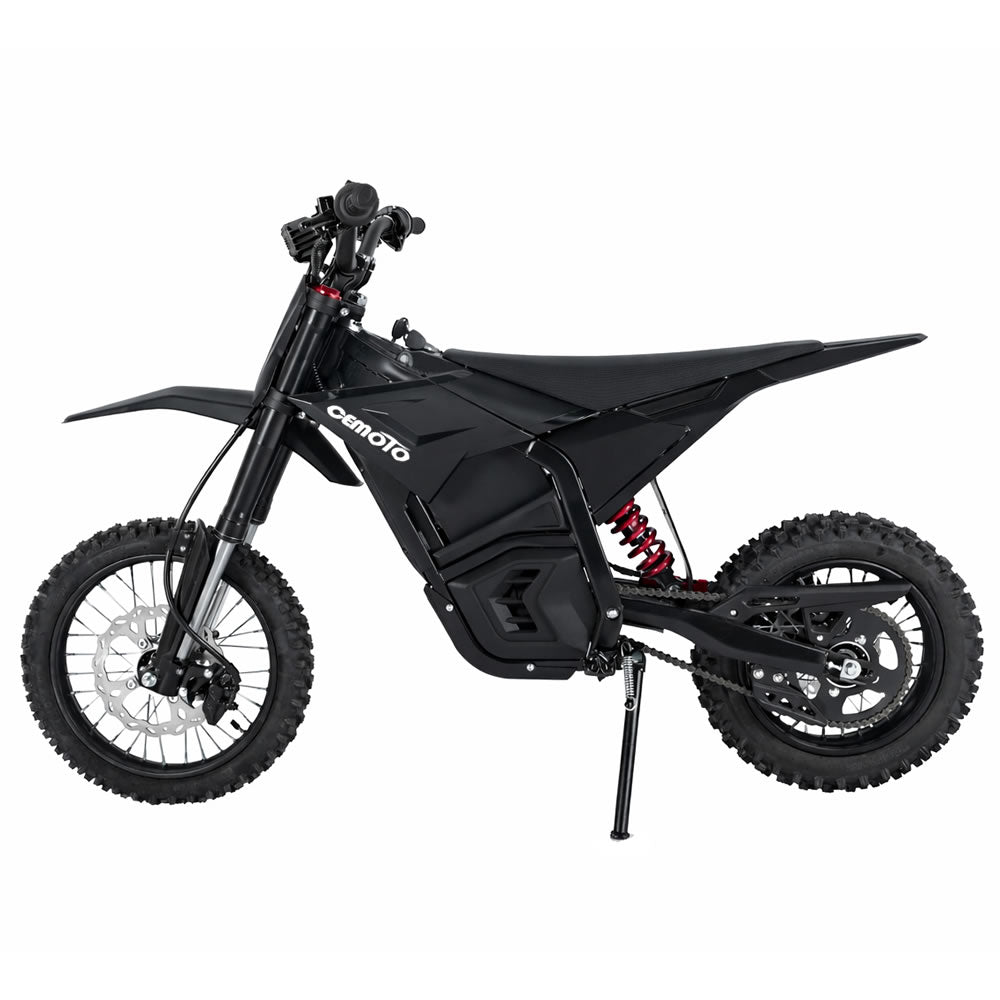
For a confirmed private-land or track use case, we offer the CEMOTO D-Series as an off-road candidate. Depending on the configuration, it has 3,000W or 6,000W peak motor power, an estimated charging time of about 6 to 8 hours, and a limited two-year warranty on core components, subject to the current market policy.
Review our supported D-Series specifications only after the off-road path fits. We do not present these product facts as proof of public-road eligibility. The go/no-go rule is simple: buy only when the seller’s documents, authority guidance, insurer response, destination permission, and support answers align.
FAQs
What May Determine Whether a High-Power Electric Bike Is Treated as a Motorcycle?
Whether a high-power electric bike is treated as a motorcycle may depend on its exact identity and specifications, original intended use, documents, intended location, and jurisdiction. Power, appearance, and seller terminology are not enough to determine the result nationwide. Ask the applicable motor-vehicle authority about the individual vehicle and use case.
Does an Electric Dirt Bike Need a VIN?
It may need a VIN or another identifying record accepted by the relevant state system. NHTSA’s federal VIN rules do not regulate primarily off-road dirt bikes, but that does not settle state paperwork. Ask the seller for the VIN, serial number, certification label, certificate of origin, title, or other records supplied for the exact configuration. Then confirm acceptance with the authority and insurer.
What Is the Difference Between an Electric Dirt Bike and an Electric Motorcycle?
For ownership, an electric dirt bike usually points you toward destination permission, lawful transport, and off-road support. An electric motorcycle intended for public-road use may add classification, ownership documents, registration, insurance, equipment, operator rules, and road-access checks. The labels alone do not settle the legal result.
Can I Ride an Electric Dirt Bike on Public Roads?
Only after the exact vehicle, jurisdiction, documents, insurer acceptance, required equipment, operator rules, and specific road access are confirmed. If one material requirement remains unresolved, treat the road path as unresolved rather than assuming an off-road model is a road-legal substitute. Verify current requirements with the relevant authority, insurer, seller, and road or location operator.
