

Electric Dirt Bike Tires: Street, Knobby, or Mixed-Surface Tread?


Choose electric dirt bike tires by the surface you ride most: street-oriented tread for pavement, knobbies for loose dirt and mud, and mixed tread for recurring pavement-and-hardpack routes. Before ordering, verify wheel, axle, hub, clearance, construction, and documentation details. Street tires alone do not make an off-road electric dirt bike street legal.
Choose electric dirt bike street tires by the surface you ride most often—not by the label that sounds most versatile. Pavement-dominant routes generally favor street-oriented tread, frequent loose dirt or mud favors knobby tread, and regular pavement-plus-maintained-dirt routes may justify a mixed-surface compromise. Before ordering any set, confirm the exact bike model, front and rear wheel fitment, axle and hub compatibility, clearance, and documentation. Tire choice also remains separate from street legality: changing tread does not automatically make an off-road electric dirt bike legal for public roads.

Electric Dirt Bike Street Tires: Choose by Surface
The dominant surface should set the direction. Occasional hardpack is a different use case from frequent loose dirt or mud, so weigh the route you ride repeatedly rather than trying to find one universally best tire. For pavement-heavy routes, electric dirt bike street tires can make sense only after the bike-specific fitment checks are complete.
| Surface | Tread direction | Main tradeoff |
|---|---|---|
| Pavement | Street-oriented | May provide a smoother rolling feel and more predictable steering on firm surfaces, but gives up some loose-terrain bite. |
| Hardpack | Street-oriented or mixed | A street-oriented tire may work when the hardpack is firm and controlled; mixed tread adds more compromise for changing conditions. |
| Loose dirt | Knobby or terrain-focused | Prioritizes a terrain-focused tread pattern, while pavement feel may become more compromised. |
| Mud | Knobby or terrain-focused | Keeps loose and wet terrain as the priority; exact results depend on tread design, terrain, and setup. |
| Mixed routes | Mixed-surface, or two dedicated sets | A compromise can suit recurring pavement and maintained dirt, but it will not behave like a single-surface tire everywhere. |
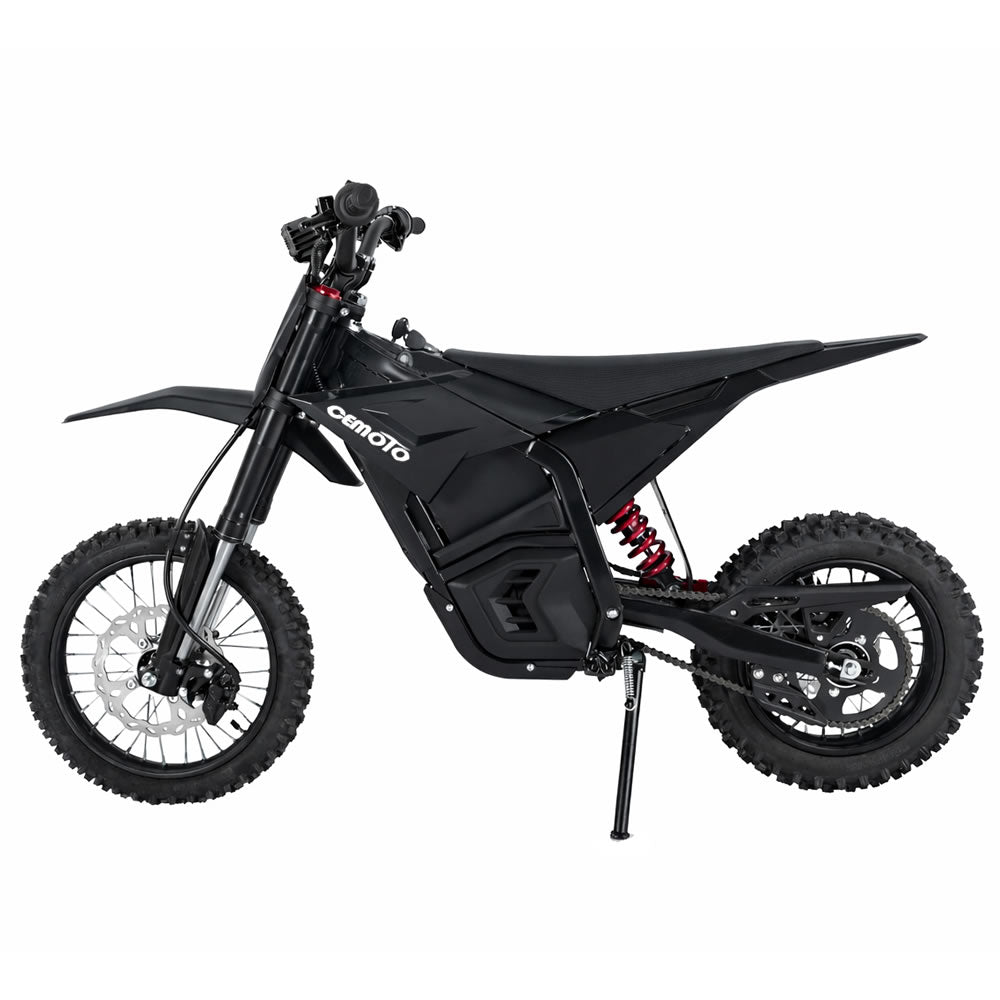
For a verified D-Series application, CEMOTO's catalog lists a front-and-rear D-Series street tire set in a 14/12 configuration. Treat that as a shopping path, not proof of compatibility, pressure, terrain capability, or road eligibility; confirm the exact model and installation requirements first.

Balance Pavement Feel Against Trail Traction
The useful street tires vs. knobby tires on an electric dirt bike comparison is about changing behavior across your route. Tread pattern matters, but casing, construction, pressure, terrain, and bike setup can also change the way either option feels.
Street Tread on Pavement and Hardpack
Street-oriented tread generally favors firm pavement because more of the tread pattern is designed around consistent contact with a hard surface. It may feel more predictable when steering through neighborhoods or other controlled paved areas, and it can suit hardpack that stays relatively firm and even.
That tradeoff changes as the surface becomes loose, rutted, wet, or uneven. A street-style pattern does not turn an off-road bike into a road-legal vehicle, and it should not be treated as a substitute for terrain-focused traction when loose dirt or mud is a regular part of the route.
Knobby Tread on Loose Dirt and Mud
Knobby tread is generally the terrain-focused direction when loose dirt, mud, or uneven trails are the main priority. The separated tread blocks may offer a more suitable bite-oriented approach than a street pattern, but exact behavior depends on the tire design, soil, moisture, speed, rider inputs, and bike setup.
On pavement, that terrain focus can produce a more compromised rolling and steering experience than a street-oriented option. Mixed tread sits between these choices: it may be practical for maintained dirt and pavement, but it is still a compromise rather than a guarantee of equal behavior on every surface. Those are the key tradeoffs to consider when comparing D-Series off-road electric dirt bike route use with a replacement tire decision.
Run the Electric Dirt Bike Tire Fitment Checklist
Treat the electric dirt bike tire fitment checklist as a purchase gate. Confirm both wheel positions, axle and hub fit, surrounding clearance, construction requirements, and the bike and tire documentation before ordering. General manufacturer-recommended tire size and documentation can guide the first check, but it does not replace model-specific information.
- Confirm the front and rear wheel sizes. Check both positions against the owner's manual, current tire information, or model documentation. Do not assume that a front size and rear size can be swapped, or that a 14/12 listing applies to every D-Series variant.
- Verify the axle, hub, rim, and mounting match. Diameter alone is insufficient. Confirm the axle interface, hub arrangement, rim width or specification, and any mounting requirements before ordering.
- Check surrounding clearance. Inspect the fork, swingarm, brake components, chain or belt area, and fenders where applicable. A tire that appears to fit the rim can still create an undocumented clearance problem.
- Confirm construction and installation requirements. Check whether the setup requires a tube, a specific valve or hardware arrangement, stated load information, or other limits. The general principle is to use correctly matched tires, rims, tubes, and valves and to verify matching tire, wheel, and clearance requirements.
If any specification is missing or conflicts with another source, pause the order and obtain model-specific guidance from CEMOTO, the tire manufacturer, or qualified service support. Do not solve an undocumented mismatch by guessing.
Set Tire Pressure From the Manual, Not a Guess
After a tire change, start with the electric dirt bike owner's manual and the replacement tire documentation. Tire size, load, wheel, and bike differences mean there is no universal PSI value that can safely replace model-specific instructions.
Use this sequence: locate the bike's specified pressure and the tire maker's installation guidance; use the specified cold-check procedure; inspect seating, the tube or valve area, and visible damage; then resolve any conflict before riding. Official motorcycle maintenance guidance supports using the correct tire information and maintaining pressure according to the owner's manual and safety labeling, rather than borrowing a number from another motorcycle's setup (manual-first cold-pressure guidance).
A change in load or terrain is a reason to recheck the applicable documentation—not to invent a new pressure. For general upkeep after the installation, our electric dirt bike maintenance guide can be a follow-up resource, but it does not replace the manual for this bike and tire combination.
Keep Tire Choice Separate From Street Legality
No—installing street tires does not make an off-road electric dirt bike street legal. A tire's design or highway-use marking is separate from the vehicle's classification. Public-road use can depend on registration, required equipment, licensing, insurance, inspection, and state or local access rules.
California provides a jurisdiction-specific example: California off-highway electric motorcycle road-use guidance says certain electric off-highway motorcycles are not intended for public roads and cannot necessarily be retrofitted with aftermarket equipment to become eligible for on-highway registration. That is not a nationwide legal determination. Washington's modified off-road motorcycle registration requirements provide another state-specific example showing that equipment, inspection, and registration can extend well beyond tires.
Before riding on public roads, check the bike's classification and the actual requirements with the relevant state DMV, transportation agency, OHV authority, and local land manager. A street-tire purchase should never be treated as legal approval.
Choose the Set That Fits Your Actual Route
The most defensible electric dirt bike tire choice for mixed surfaces starts with a dominant-surface rule: choose street-oriented tread when pavement is most of the route, keep knobby traction as the priority when loose dirt or mud is frequent, and evaluate mixed tread when pavement and maintained dirt recur in meaningful proportions.
Use this final sequence:
- Classify the route by how often you ride pavement, hardpack, loose dirt, and mud—not by the one unusual ride you take each season.
- Choose the tread direction that serves the dominant condition, accepting the handling tradeoff on secondary surfaces.
- Run every fitment and documentation check before ordering, including both wheel positions and the surrounding clearance.
- Confirm pressure instructions from the manual and tire documentation after installation.
- Check street-use rules separately if public roads are part of the plan.
A street-oriented D-Series set may be the practical direction for a pavement-dominant route with occasional controlled hardpack only if the documented fitment matches your exact bike. If you are still comparing models after those checks, browse electric dirt bike models as a next shopping step—not as a substitute for compatibility or legal verification.
FAQs
The questions below focus on fitment, surface tradeoffs, pressure guidance, and the separate legal checks that come with a tire change.
Can You Put Street Tires on an Electric Dirt Bike?
Only when the bike and tire documentation match. Diameter alone is not enough; confirm wheel positions, axle, hub, rim, clearance, construction, and installation requirements before ordering. If the listing does not identify those details, get model-specific confirmation before installation.
Are Street Tires Good for Dirt-Bike Trails?
They may suit occasional controlled hardpack, but frequent loose dirt or mud generally points toward terrain-focused knobby tread. For trails that vary substantially, compare the route's wet and loose sections—not just its firm stretches—before choosing a street-oriented pattern.
What Tires Work Best for Mixed Pavement and Dirt?
Mixed tread may fit recurring pavement and maintained dirt. Frequent mud may justify prioritizing knobby traction or using separate sets. The better choice depends on whether pavement convenience or loose-terrain control matters more on your regular route.
Do Street Tires Make an Electric Dirt Bike Street Legal?
No. Classification, registration, equipment, licensing, insurance, inspection, and access rules must be checked with the relevant authority. Those requirements apply to the vehicle and where you ride, not just to the tread pattern.
What If the Manual and Tire Listing Disagree?
Pause installation. Ask CEMOTO, the tire manufacturer, or qualified service support to confirm fitment, construction, and pressure guidance before riding. Do not use a familiar size or pressure from another bike to resolve the conflict.
