

E-Bike Parts or Local Service? A Pre-Purchase Support Scorecard


Neither a parts catalog nor a nearby shop proves an e-bike will be easy to keep running. Compare the full support chain—identification, diagnosis, compatible parts, qualified labor, warranty handling, and downtime—before ordering.
Neither a parts catalog nor a nearby shop proves that an e-bike will be easy to keep running. The safer purchase is the support model that can identify a likely failure, diagnose it, obtain the correct replacement, install it, and resolve warranty questions within your tolerance for downtime. That makes e-bike repairability a pre-purchase support question—not just a maintenance question.

Use the checks below to compare a direct-to-consumer bike or scooter with a local-dealer-backed option. Score verified evidence, record unknowns, and give more weight to support gaps if the bike is your daily transportation.
Set the Support Standard Before Comparing Bikes
E-bike repairability means having a workable path from identifying a fault to finding compatible parts, using reliable information, securing qualified labor, and resolving post-sale issues. A nearby shop or a large accessories catalog may help, but neither proves that the exact electrical system can be diagnosed or that the right part can be sourced.
Independent repairability research uses this broader lens: repair access can depend on compatible parts, manuals, diagrams, electronic information, and tools—not simply on whether a repair shop is nearby. Treat these as separate support signals when comparing bikes.

Before checkout, create an “unknowns” column for every unanswered question. For example, note whether the manual identifies the display connector, whether the motor system has a supported diagnostic route, whether a shop accepts customer-supplied parts, and who pays for diagnosis or shipping under the warranty process. Published, model-specific evidence matters more than a generic sales claim, a low price, or the fact that the bike was sold through a particular channel.
Use these e-bike repairability checks as a separate research task, then verify the exact model's information yourself.
Test the Parts Pipeline Against Likely Failures
A parts pipeline reduces downtime only when you can identify the failed component, confirm that it fits, obtain it in time, and find a realistic way to install it. Audit likely failure points before assuming that a visible parts page means the bike will be supported.
Check Coverage for Model-Specific Replacement Parts
Before ordering, check model-specific parts and service information, then record any compatibility or availability gaps. This buyer-audit approach is supported by PIRG's guidance on checking for spare parts and service manuals before purchase; it is a way to check support, not a promise of long-term stock.
For likely replacement items—such as a display, charger, battery, controller, throttle, motor component, or brake part—record:
- The exact model and revision.
- Voltage, connector, mounting, and other relevant specifications.
- Evidence that the part fits that configuration.
- Current stock status and the displayed shipping estimate.
- The return route if the diagnosis or fit is wrong.
- Who can install it and whether that installer accepts customer-supplied parts.
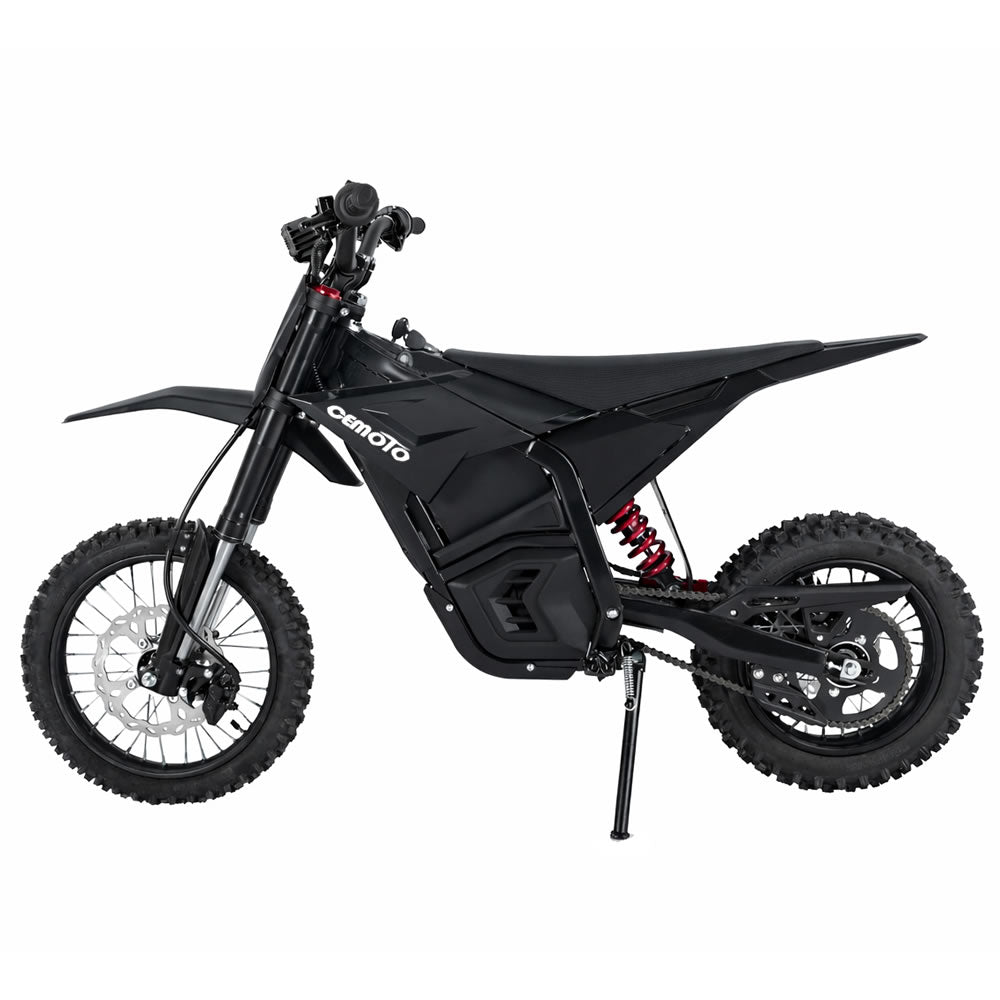
Do not treat a broad catalog as proof that every item fits your bike. If you are reviewing a CEMOTO model, the replacement parts and accessories collection can be a starting point for navigation. A specific listing, such as a replacement display, still requires you to match the listed voltage and model details to your bike before buying.
Estimate Downtime From Ordering to Installation
Shipping is only one part of the delay. Estimate the full sequence: identify the fault, contact the brand if needed, confirm the part, wait for delivery, secure shop intake, and complete installation. A displayed delivery window is a planning input, not a guarantee of arrival or repair completion.
A rider with backup transportation may tolerate an unresolved shipping estimate if the part's fit, return route, and installer are clear. A commuter who needs the bike for work should treat an unknown diagnosis or installer as a larger gap, even if the part appears to be in stock. Compare the full repair path with the number of days you can realistically be without the bike.
Verify Whether Local Service Can Actually Help
A nearby shop is an advantage only if it accepts the exact model and can perform the type of work you are likely to need. Mechanical bicycle service, electrical diagnosis, battery work, firmware updates, proprietary-part replacement, and warranty repairs may have different boundaries.
Ask Shops About the Exact Model and Repair Boundary
Call before purchase and save the answer. Use this sequence:
- Identify the exact make, model, motor system, battery, controller, and display.
- Ask whether the shop handles routine mechanical work on that model.
- Ask separately about electrical diagnosis, batteries, firmware, proprietary parts, and warranty repairs.
- Confirm whether it accepts customer-supplied parts and how it charges for labor.
- Ask what information it needs for intake and whether it can provide a repair estimate after diagnosis.
A “yes” to bicycle service is not necessarily a “yes” to system-level service. Record each answer separately so different shop policies do not blur into one assumption.
Flag Proprietary or Software-Dependent Repairs
A mechanic may be comfortable with brakes, tires, chains, or other standard bicycle hardware while lacking the tools, information, parts, account access, or authorization for an electronic repair. For Bosch-equipped systems, official Bosch service documentation describes professional diagnostics that can read system information and support software updates. Use that as a system-specific reason to verify the exact shop and platform, not as a rule for every e-bike.
Diagnostic access is platform-specific. For example, the Bafang BESST Pro instructions describe compatibility with listed systems, so a shop's general familiarity with e-bikes does not establish compatibility with your motor, battery, controller, or display. Ask which tool supports the exact configuration and whether the shop can produce a fault report or perform required updates.
The more a repair depends on manufacturer information or software, the more important remote troubleshooting, parts identification, and a clear warranty route become. If the shop can perform only mechanical work, include a brand-support or shipping plan rather than counting that shop as full-service coverage.
For additional context while comparing designs, review the guide to proprietary component risks, but do not treat general guidance as proof that a particular model is difficult to repair.
Price Warranty Support Against Downtime
Warranty length alone does not show how a failure will be handled. Compare the diagnosis, approval, parts, shipping, labor, installation, and escalation steps with the practical cost of being without the bike. Do not assume a cost is covered unless the current model terms say so.
Map the Warranty Process Before Checkout
Record these details from the current warranty and support pages, or ask the brand directly:
- Contact route and response process.
- Evidence required, such as photos, video, serial number, or diagnostic information.
- Who diagnoses the failure and where the repair occurs.
- Whether parts, shipping, diagnosis, labor, installation, or replacement handling are covered.
- Exclusions and the escalation path if the first support response does not resolve the issue.
A support ecosystem may connect diagnostics, warranty or parts management, manuals, troubleshooting, and service locations, but each function still needs to be verified for the exact model. A warranty document is useful only when you can translate it into who does what, who pays, and where the bike goes.
Weight Support by the Cost of Being Without the Bike
Your use case should change the importance weights in the final score. The table below is a qualitative guide, not a cost calculation or service guarantee.
| Use case | Downtime sensitivity | Support priorities |
|---|---|---|
| Occasional recreation | Lower when backup transportation exists | Clear parts fit, documented repair route, reasonable returns |
| Regular commuting | Moderate to high | Parts access, local mechanical labor, diagnosis, escalation |
| Daily transportation or work dependence | High | Confirmed electrical service, rapid evidence path, warranty responsibility, backup plan |
| Limited local service | High even for occasional use | Manuals, remote troubleshooting, parts identification, shipping, realistic installer |
For a recreational rider, a documented brand pipeline may offset weaker local access. For a worker or commuter, an unresolved electrical-service route can outweigh a favorable price or longer stated warranty. You can also compare standardized versus proprietary parts as a cost lens, but model-specific prices and labor rates are still needed for an actual ownership calculation.
Score E-Bike Repairability Before You Order
Use a buyer-weighted decision matrix, not a benchmark: rate each support factor from 0 to 2, apply a personal importance weight, and treat unresolved critical gaps as red flags rather than averaging them away. The method organizes evidence; it does not certify a bike or guarantee a repair outcome.
Build a Weighted Pre-Purchase Scorecard
Use weighted result = evidence score × personal importance weight. Give an evidence score of 0 when support is absent or unverified, 1 when it is partial or conditional, and 2 when current model-specific evidence is clear. Choose importance weights that reflect your use case—for example, from 1 for low importance to 3 for critical importance.
| Support factor | Evidence to verify | Your weight × score |
|---|---|---|
| Parts availability | Exact part, revision, fit, stock, shipping, and returns | ___ × ___ |
| Documentation | Model manual, diagrams, troubleshooting, and part identifiers | ___ × ___ |
| Diagnostics | Exact motor, battery, controller, and display support | ___ × ___ |
| Local mechanic familiarity | Shop acceptance, repair boundary, parts policy, and intake | ___ × ___ |
| Warranty handling | Contact, diagnosis, shipping, labor, installation, and escalation | ___ × ___ |
| Downtime fit | Whether the full repair path matches your transportation needs | ___ × ___ |
| Status | Record missing evidence separately; do not average away a critical gap | Accept / conditional / reject |
Do not invent a pass total. A high score can still hide one unacceptable failure path, such as no way to identify a compatible display or no workable contact for a warranty problem.
Apply the Red-Flag and Next-Action Check
Before placing the order:
- Identify any unknown involving exact-part compatibility, warranty responsibility, diagnostics, or a realistic installer.
- Ask the brand and one local shop for written or recorded answers.
- Update the evidence scores without guessing. Reweight local labor and downtime if your transportation situation changes.
- Accept the bike only when the support path fits your needs; choose conditional when a noncritical answer remains open; keep comparing when a critical gap conflicts with your use case.
A red flag overrides the total when there is no credible replacement path, no workable warranty contact, unknown compatibility for a critical component, or no realistic repair route. If the criteria fit after verification, you can compare available e-bikes using the completed scorecard rather than treating catalog presence as proof of support.
FAQs
The right choice depends on the exact model, the repair work a local shop will accept, and how much downtime you can tolerate. Use these answers to close the most common evidence gaps before ordering.
Is It Better to Buy an E-Bike From a Local Shop if I Depend on It for Commuting?
Only if the shop confirms service for the exact model and electrical system. If it handles mechanical work but not diagnosis, batteries, firmware, or proprietary parts, verify the manufacturer's support route and arrange backup transportation.
How Long Should E-Bike Replacement Parts Be Available?
There is no universal availability period established here. Ask how the manufacturer handles critical model-specific parts after a model is discontinued, and get that answer in writing if future access to a battery, controller, display, or other essential component matters.
Can Any Bike Shop Repair an Online E-Bike?
No. Ask separately about mechanical work, electrical diagnosis, batteries, proprietary components, firmware, customer-supplied parts, and warranty repairs. If any answer is “no,” identify the brand, shipping, or mobile-mechanic route for that repair category.
What Should I Do if an E-Bike Brand Has Parts but No Nearby Repair Shop?
Verify that the manuals support fault identification, remote troubleshooting is available, and a realistic installer or shipping route exists. Parts alone do not solve a repair you cannot diagnose, install, or return when the fit is wrong.
