
E-Bike Connectors: What Standardization Can—and Cannot—Solve


Identify unknown e-bike connectors, verify physical and electrical requirements, and choose a matched part, supported assembly, or qualified help.
A standard-looking connector is not automatically interchangeable. E-bike connectors are a documented replacement match only when the physical interface, electrical requirements, sealing, and system relationship all align. Standardization can make identification and sourcing easier, but a matching shape is only a starting point. Before ordering or modifying anything, gather the bike and component documentation and resolve every decision-critical interface detail.

What Standardization Can—and Cannot—Solve for E-Bike Connectors
Standardization can help you recognize a possible connector family, find replacement parts, and achieve physical mating when the relevant specifications truly match. It cannot, by itself, confirm voltage, current capacity, polarity, pinout, sealing, communication requirements, or compatibility with the complete e-bike system.
That distinction matters because a product marketed as universal may fit a micromobility device while still being incompatible with it, as the CPSC warning about universal chargers explains. The warning concerns chargers, so it should not be extended to every connector type. It does establish a useful boundary: physical fit is only an initial clue.

The connected parts matter, too. The UL 2849 evaluation covers e-bike systems at the combined electrical-system level, including the drivetrain, battery system, and charger system, rather than evaluating a plug in isolation. A connector can therefore look similar while the connected components require different electrical or communication conditions. For standard e-bike connectors, treat a visual match as a candidate, not a compatible replacement, until model-specific documentation or qualified support confirms the interface.
If you cannot confirm the voltage, polarity, pinout, current requirements, or system documentation, stop before ordering a substitute or modifying the connection. Contact the manufacturer, dealer, or qualified technical support instead.
Identify an Unknown E-Bike Connector Without Altering the System
The safest first step is to create a documentation record, not to test or alter the connection. Disconnect the bike from charging, collect the model labels, and take clear photos before searching for a replacement.
- Identify the component and location. Record the bike model and configuration, then note whether the connector belongs to the battery, controller, throttle, display, charger, motor, or another component. Record its exact location and documented function, if available.
- Photograph the interface as it is. Capture both sides without forcing a keyed plug. Record the apparent interface or gender, keying, pin count, markings, wire count and arrangement, latch, strain relief, and visible sealing features.
- Record clues without treating them as proof. Wire color, pin count, shape, and markings can help organize a search, but they do not establish the connector family, electrical function, or compatibility on their own. Do not cut wires, force a connection, repin terminals, or experiment with an unknown pinout.
- Find the controlling documentation. Compare the photos and model information with the component manual, parts diagram, manufacturer documentation, or dealer support. The verification record should resolve voltage, current capacity, polarity, pinout, communication requirements, sealing, and exact configuration.
- Stop when an unknown could change the decision. If a decision-critical field remains unknown or the documentation conflicts, send support the model labels, photos, location, and symptoms. Do not turn an unresolved visual clue into an order.
This is a practical way to approach how to identify an unknown plug without assuming that visual inspection alone identifies a connector standard.
Compatibility Checklist: Match Every Required Interface Detail
Use this table as the ordering gate. A physical mismatch rejects the candidate immediately; a physical match only allows the remaining checks to continue. CPSC staff have noted that a charger for a higher-voltage battery pack could use the same connector as one for a lower-voltage pack, so the plug cannot replace system verification.
| Check | What a confirmed match establishes | Action if unknown or mismatched |
|---|---|---|
| Connector family and keying | The documented interface is the one specified for the component, with the intended keying and orientation. | Reject a physical mismatch. If the family is uncertain, pause and request documentation. |
| Gender, pin count, and physical mating | The replacement mates without force and matches the documented interface dimensions or part reference. | Do not force, adapt, or order based on appearance alone. |
| Voltage and current capacity | The connector and connected components are documented for the required electrical conditions. | Treat the candidate as unverified. Confirm the requirements through specifications or support. |
| Polarity and pinout | Each contact has the documented electrical role for that exact component and configuration. | Do not repin, splice, or experiment. Escalate if the pinout is unavailable. |
| Communication or battery/controller requirements | The connected devices are documented to work together, including any required system communication. | Do not assume a passive physical connection is enough. Seek a supported match. |
| Sealing, strain relief, and mechanical fit | The replacement has the documented environmental and mechanical features required at that location. | Do not infer sealing or durability from a seller photo. Confirm the part or choose a supported assembly. |
| Exact bike, component, and configuration | The replacement is listed or confirmed for the specific model, variant, and system context. | One unknown decision-critical row means compatibility is not verified. Escalate or choose a documented assembly. |
The CPSC technical-panel letter provides the voltage example behind the electrical stop point. Use the table to organize questions, not as a substitute for a manual, parts diagram, or manufacturer confirmation.
Choose a Matched Part, a Supported Assembly, or Qualified Help
Choose among three paths based on the checklist results and how the connector is built into the component. A damaged connector is not automatically a connector-only repair.
Order a Documented Matched Part
Order a connector or component-level replacement when the exact bike and component context, interface requirements, and replacement documentation align. Give the seller or support team the model, configuration, connector photos, and documented electrical requirements, and ask for confirmation tied to that exact setup.
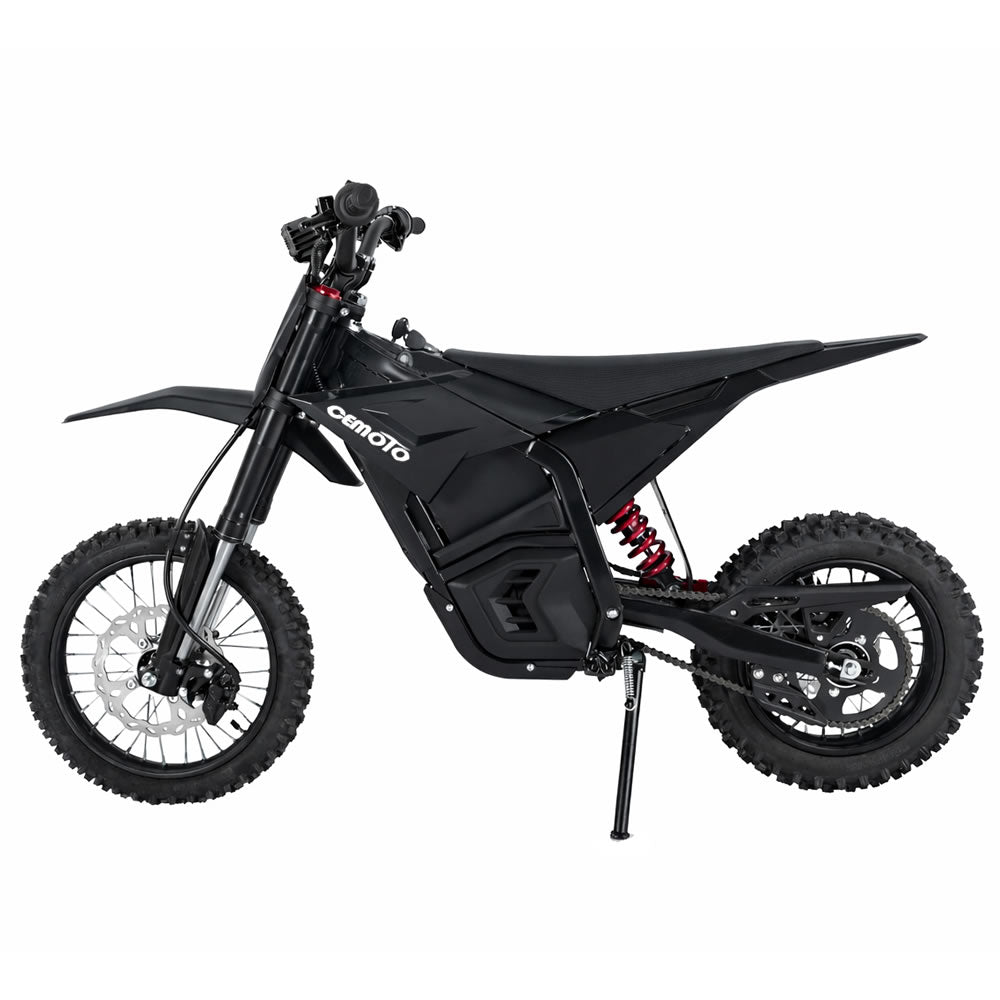
For a bounded product example, the CEMOTO D03 Twist Throttle page lists compatibility with CEMOTO D02 and D03 models and availability in 48V and 72V configurations. Those facts support a model and voltage check only; they do not establish connector type or compatibility with another system.
For battery or charger interfaces, use the manufacturer-confirmed replacement path rather than treating a similar plug as approval. The linked CPSC guidance on universal chargers supports that conservative approach, but it does not authorize every connector-only repair.
Choose a Complete Supported Cable or Assembly
Choose a complete supported cable or assembly when the connector is molded into a cable, attached to a battery or controller, or part of a proprietary interface that is not separately documented. This path avoids splicing, repinning, or adapting an unknown connection.
Before ordering, confirm what the assembly includes and the exact bike, component, voltage, and system configuration it supports. A supported assembly is the better fit when the connector-only option has no model-specific documentation, even if the loose replacement appears physically identical.
Escalate to Manufacturer, Dealer, or Qualified Technical Support
Escalate when labels are missing, documentation conflicts, the battery or controller interface is damaged, or the proposed repair would require cutting wires, changing a pinout, or testing an unknown connection. Provide photos, model labels, connector details, and symptoms so support can identify the correct part or service path.
For battery, charger, or system-level damage, use a manufacturer-confirmed replacement or qualified service rather than improvising a modification. The CPSC micromobility safety guidance supports manufacturer confirmation for replacement batteries and qualified repair for damaged or modified systems. Do not continue with this repair when a decision-critical requirement remains unknown.
Evaluate Proprietary Connectors as an E-Bike Ownership Choice
Proprietary versus standardized e-bike connectors is not an automatic quality ranking. Evaluate the support system around the interface: documented parts, complete assemblies, manuals, configuration details, service options, and a clear contact path.
A commonly used interface may improve recognition or sourcing when its electrical and system requirements also match. It does not guarantee a safe drop-in replacement. A proprietary interface may narrow off-the-shelf substitution and increase dependence on the manufacturer, but a well-documented proprietary platform can still offer a clear supported repair path.
Before buying a platform, ask these questions and record the answer as yes, no, or support required:
- Are replacement connectors or complete supported assemblies available for the exact model?
- Are model, voltage, and configuration variants clearly documented?
- Can the manufacturer or dealer confirm the replacement path before purchase?
- Does the service path avoid cutting wires, changing a pinout, or adapting an unknown interface?
- If a component is integrated, is the complete replacement assembly identified and supported?
The practical ownership test is simple: compare the platform's documented repair and sourcing path, not the connector's appearance. Save the answers with the bike's model information, then use that record when choosing a platform or ordering parts.
Frequently Asked Questions
These answers apply the same documentation-first rule to common connector decisions, with the next action tailored to each situation.
Are E-Bike Connectors Universal?
No. A familiar or physically mating plug is only a candidate clue. Confirm the exact physical, electrical, and system requirements, especially for battery and charger interfaces, before ordering a replacement.
Can I Replace a Damaged Connector?
Sometimes, but only when the connector-only replacement is documented for the exact bike or component configuration. If the interface is integrated, unknown, battery-related, controller-related, or would require rewiring, choose a supported assembly or qualified help.
Why Do Proprietary Interfaces Matter?
They can affect parts sourcing, documentation, support, repair options, and dependence on one platform. The useful buying question is whether the manufacturer provides a clear supported service path, not whether proprietary or standardized is inherently better.
How Do I Identify an Unknown Connector?
Record the bike and component model, connector location, interface or gender, keying, pin count, markings, wire arrangement, latch, and visible sealing. Use those details to find documentation or support confirmation rather than relying on appearance alone.
