
Electric Dirt Bike Trails Near Me: How to Verify a Legal Riding Area


Use official maps and rules to vet dirt bike trails near me, match the vehicle class, record rider requirements, and decide whether the route is ready.
A nearby search result is only a lead, not permission to ride. To verify dirt bike trails near me for an electric dirt bike, identify the responsible land manager or operator, confirm that the exact area is designated for motorized use, match the bike to the site's vehicle rules, check each rider's paperwork and conditions, and verify current access before loading the bike. Save the official confirmation, and treat any unresolved access-critical detail as a no-go until you have an answer.
Start with the Official Source for Dirt Bike Trails Near Me
Begin with a managed OHV area, motorized trail system, private park, or track—not an ordinary public-park listing. Identify who controls the destination, then open that operator's current map, rules, entrance information, and route or boundary details. A search pin, review, or trail-app listing can help you find candidates, but it does not establish lawful motorized access.
For a National Forest candidate, the current Motor Vehicle Use Map identifies designated motorized routes and areas. Other federal, state, county, and private destinations may use different maps and terminology, so use the responsible manager's own system rather than applying a federal rule to another location.
Create a provisional shortlist only when each candidate has an identifiable manager, an official motorized designation, and a specific entrance or route. Record the destination name, official map or rules page, route or area name, and entrance details. This is the first step in finding dirt bike trails near me that are legal for your bike, because proximity and legal access are separate facts.

Confirm That the Specific Electric Dirt Bike Fits the Site's Vehicle Rules
An electric motor does not automatically establish trail eligibility. For each candidate, find the exact vehicle category the destination accepts, then compare that wording with the specific machine's documented characteristics. If the destination's terminology is unclear, ask the land manager a vehicle-specific question and save the response before relying on it.
Match the Site's Vehicle Category
Look for wording such as motorcycle, off-highway motorcycle, ATV, e-bike, bicycle, street-legal vehicle, or another local category. Check whether electric motorcycles or e-motos are expressly included, excluded, or not addressed. A route designated for one category is not automatically open to another.
When a destination distinguishes among motorcycles, ATVs, street-legal vehicles, or seasons, compare the exact wording with the candidate route. The Forest Service's OHV program guidance provides background on this type of designation; it is not a rule for other land managers.
BLM's policy illustrates why the term "e-bike" is not enough: its defined Class 1–3 e-bike rules do not automatically cover other electric vehicles, which remain managed as OHVs under its regulations. The BLM e-bike classification boundary is a BLM example, not a nationwide classification rule. The responsible destination still decides which vehicle categories it allows.
Compare the Bike's Documented Characteristics
Compare only the characteristics named in the destination's rules. They may include vehicle category, registration or identification, sound, width, speed, equipment, or another stated condition. Do not infer eligibility from a product label, visual appearance, motor wattage, or the fact that a machine is marketed as an off-road dirt bike.
Write down the exact question if clarification is needed: "Is this specific electric dirt bike accepted on this route, and what category or documentation applies?" Include the model, relevant specifications, planned route, and riding date. Record the question and response rather than treating a general statement that electric bikes are allowed somewhere on the property as an answer for this route.
Check Permits, Documents, Age Limits, and Rider Conditions
A designated route may still require destination-specific paperwork or rider conditions. Check the operator's current instructions for each vehicle and rider, and record only the requirements that the named jurisdiction or operator lists.
BLM directs OHV users to follow state regulations and register vehicles with the appropriate state agency where required, so state registration and OHV guidance belongs in the check for a BLM candidate, not in a universal rule for every destination.
Verify Paperwork and Entry Steps
For each item the destination lists, record the issuing authority, purchase or application method, effective date, fee, and proof required at entry. If the designated OHV destination lists a daily or annual permit in addition to designated trails, record that permit separately; the Allegheny National Forest's official OHV permit example shows why a route designation and a permit can be separate requirements. It does not mean every park or trail requires the same permit.
Check whether the destination lists a reservation, waiver, identification document, or registration for the vehicle, the rider, or both. Do not assume a permit from another park, a state registration, or one adult's paperwork covers the entire group.
Verify Every Rider's Conditions
If the destination lists age, supervision, operator, passenger, guardian, group, unloading, equipment, or conduct requirements, check them for each rider. Requirements may vary by land manager, jurisdiction, vehicle category, and private operator. Record what each person must complete, carry, or wear, and save the official page, receipt, reservation, waiver record, or response supporting the entry decision.
For equipment questions, use the destination's own rules first. A separate electric dirt-bike safety equipment checklist can help organize preparation, but it cannot replace the site's current requirements.
A state rule can also change the paperwork question. California's OHV bulletin on electric off-highway motorcycles, for example, says qualifying electric OHMs require the applicable OHV identification unless they are operated solely on private property under the stated exception. Treat that as a California example, not a nationwide rule.
Verify Today's Closure and Access Status Before Departure
A designated riding area may still be unavailable on your planned date. Check the exact entrance, route, riding area, operating days, seasonal dates, hours, reservation status, gate, and road access shortly before leaving. Also look for temporary notices that could change the result.
Check Scheduled Access
Match the operating calendar to the route and entrance you intend to use, not just the broader park or trail-system name. Confirm that the route's seasonal dates and any reservation window cover your planned ride. A normal operating schedule describes the planned conditions; it does not guarantee that the entrance or route will be accessible when you arrive.
Check Temporary Restrictions
Look for closure, weather, fire, maintenance, emergency, road, gate, and route-change notices. Forest Service examples show why seasonal and weather conditions can override normal route expectations. For a Tahoe candidate, check current OHV access information with the relevant local manager; other destinations need their own current alert systems.
If the status or vehicle answer is ambiguous, contact the listed office or operator with the exact machine, route, entrance, and date. Record the date checked, the person or reference, and the exact question answered. A phone call does not automatically override a published restriction, so use the response to resolve an ambiguity rather than assume broader permission.
Record the Result in One Trail-Verification Worksheet
Complete one record for every candidate, and mark unknown fields as unresolved. The worksheet records the evidence you found; it does not create permission or replace the land manager's rules.
Before deciding, create one record per candidate with:
- The official source, destination, entrance, and route.
- The accepted vehicle class and listed bike conditions.
- The paperwork and rider conditions the destination actually names.
- The current status, contact confirmation, date checked, unresolved item, and go/no-go result.
| Field | What to Record | Decision Use |
|---|---|---|
| Destination and authority | Official name, entrance, land manager or operator, map or rules URL | Reject a generic pin without a controlling source |
| Route and vehicle fit | Motorized designation, exact route or area, accepted vehicle class, listed machine conditions | Hold the candidate until the specific bike matches the stated category |
| Paperwork and riders | Permit, reservation, fee, registration, waiver, documents, age, supervision, operator, and equipment requirements for each rider, when listed | Identify what must be obtained, carried, displayed, or completed |
| Current access | Operating dates, closure and weather notices, gate, road, route, and reservation status | Confirm the intended entrance and route are usable on the planned date |
| Confirmation and decision | Contact reference, date checked, exact answer, unresolved item, and final go/no-go status | Resolve the one missing fact that could change the decision |
Use this decision sequence to find the blocking field: official designation → vehicle fit → rider and paperwork fit → current access → go/no-go. If any step is unresolved, stop there, record the missing answer, and do not load the bike. The sequence does not create permission.
A candidate is ready for travel only when the official designation, vehicle fit, rider conditions, and current route status are supported by current information. If one field remains unresolved, state it plainly and keep the status provisional rather than treating silence as approval.
Use the Confirmed Site Requirements as the Final Bike-Fit Filter
Only after the destination passes the verification checks should you compare an electric dirt bike with its terrain, operating limits, rider requirements, and accepted vehicle category. The bike's specifications can tell you what the machine is built with; they cannot tell you whether a particular public trail accepts it.
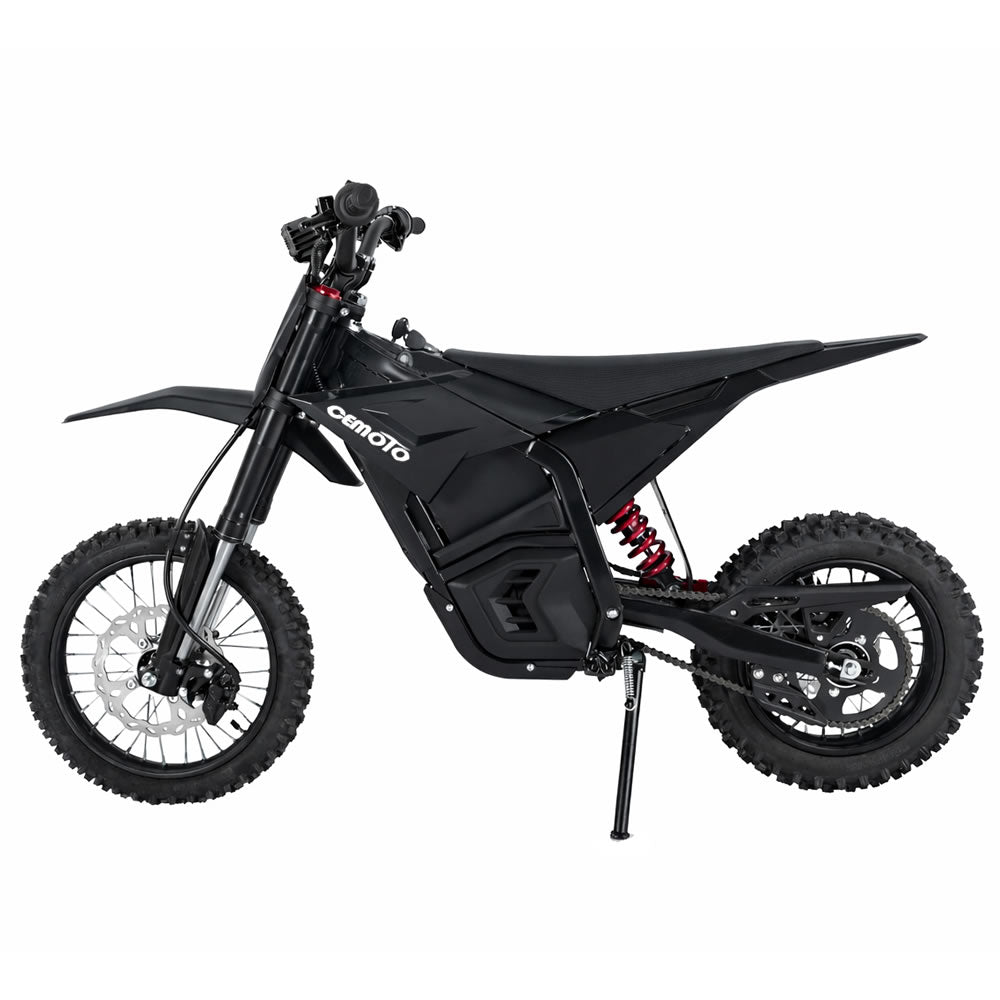
The CEMOTO D-Series product facts describe model options with 3,000W to 6,000W peak motor power, model-specific 48V or 72V battery systems, off-road suspension, hydraulic disc brakes, and stated off-road use on private land and tracks. Those manufacturer-provided details do not establish public OHV approval, registration, street legality, or acceptance at a particular trail. Review the CEMOTO D-Series specifications only after you know the site's written requirements.
For a private park or track, compare the operator's rules with the exact D-Series model's documented specifications. For public-land or OHV use, compare the destination's named category and required characteristics, then obtain location-specific confirmation for anything unclear. Do not buy or load the bike for that destination until every access-critical field is clear. Complete the worksheet, save the current official confirmation, and use that record to make the final bike choice.

Frequently Asked Questions
These questions cover exceptions that can change how you interpret a destination's vehicle or paperwork answer.
Does an OHV Designation Automatically Allow an Electric Dirt Bike?
No. The designation identifies an area or route, but the destination can limit access by vehicle class. Match the exact wording to the machine; an electric motor or e-bike label alone does not establish eligibility.
Can Private-Land Permission Change the Paperwork Question?
State law can draw a different line for private property. California's OHV bulletin, for example, describes an exception for qualifying electric off-highway motorcycles operated solely on private property under the direct control and permission of the landowner. That California example is not a nationwide rule, and the CEMOTO D-Series stated private-land-and-track use does not establish public-trail approval.
What Should I Save When the Destination Clarifies Vehicle Access?
Save the exact model, route or entrance, planned date, question, and response, along with the official page or contact reference. Keep the worksheet status provisional if any access-critical field is still unanswered. Use the saved confirmation as the gate for your final bike comparison or purchase decision.
